Our service
Pangraphics aims to build a circular business model. By establishing three pillars, we apply the insights gained from each to the others, contributing to the growth of next-generation creativity and brands.
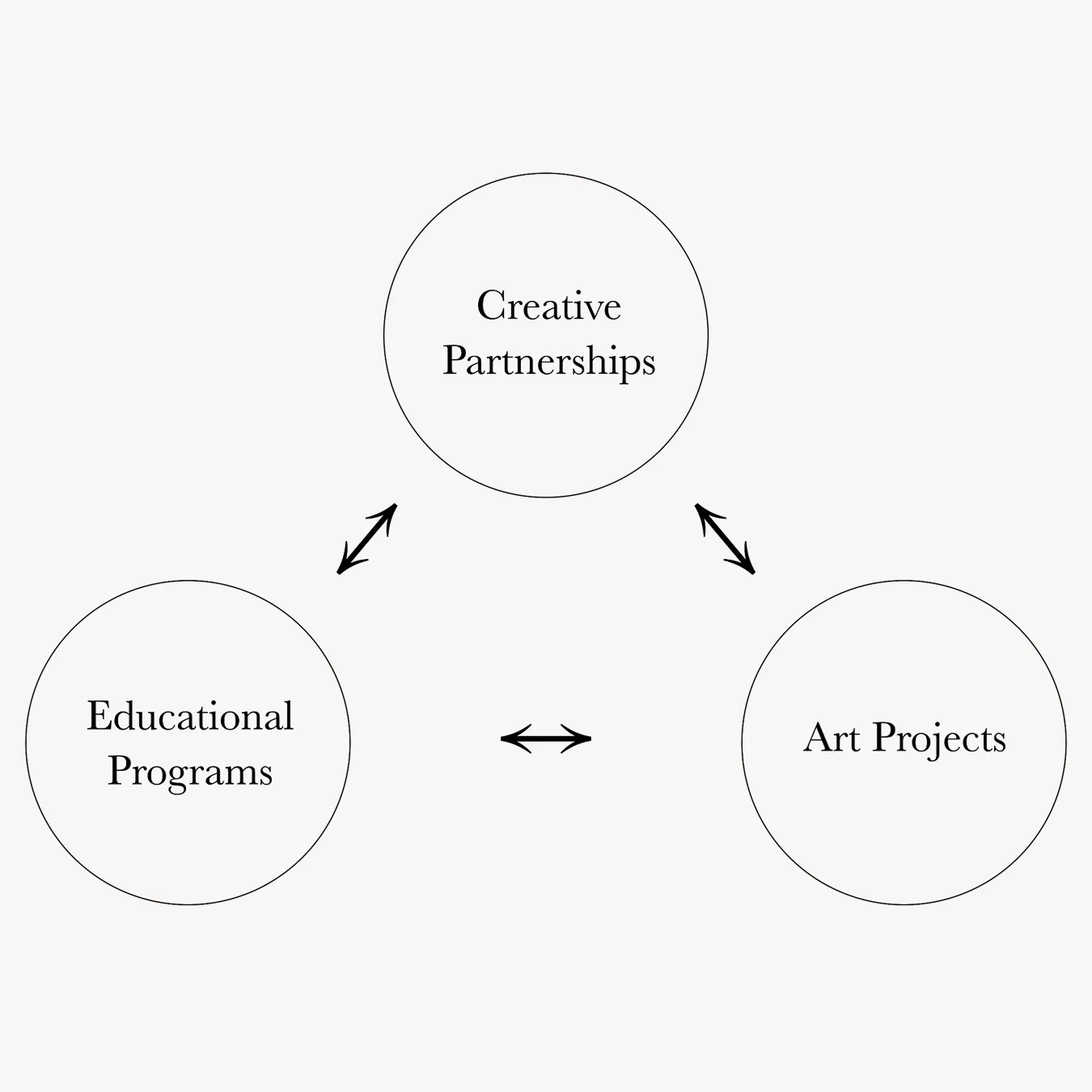
Creative Partnerships
We collaborate with clients and partners across business creation, brand consulting, art direction, and graphic design.
Designing growth with brands.
Pangraphics partners with brands from the ground up, guided by art direction. A brand's value is not defined by appearance alone. It grows through perspective and its relationship with society. We unravel, shape, and support—until brands continue to function and evolve in the world.

Educational Programs
We cultivate creativity through education, from graphic design–focused school for students and professionals to workshops and learning programs for children.
Society is changing faster than ever. By the time today's children become adults, the way we work and the values we hold will likely have changed dramatically.
That is why what matters is the ability to think for oneself, to give those thoughts form, and to repeat the process again and again. Those who can do this are able to stand firmly as themselves, in any environment. This is what Pangraphics believes.
Not everyone needs to be a creator. But creativity can be a force that allows individuals to remain true to themselves. As part of the creative industry, Pangraphics is committed to nurturing that foundation.
At Pangraphics, we develop educational programs for children and nurture emerging creators. Through initiatives such as Pankids—an experimental workshop platform based on the concept of "Imitative Behaviour" by Naonori Yago—we continue to explore new approaches to learning.
Art Projects
Through creating and sharing our work, we expand beyond borders and disciplines, extending the potential of Japanese graphic design into new territories.
By introducing hand-drawn expression into graphic design, Naonori Yago developed the concept of "Humane Error" through an ongoing exploration of the value of human-made creation. It is rooted in the idea that people are drawn not to perfection, but to imperfection—to instability, fragility, and the quiet presence of weakness. From this perspective, his practice has expanded from graphic design into artwork, contributing to the evolving value of Japanese graphic design.