Kid's Project
At Pangraphics, we create artwork and workshops through collaboration with children. Based on Naonori Yago's concept of "Imitative Behaviour," these initiatives are developed as experimental projects—exploring how the primitive creativity of children can function within society. The following text is re-edited from Yago's past interviews.
Imitative Behaviour : In the Footsteps of My Daughter
"Imitative Behaviour" originally began as a collaborative artwork series between my daughter Mashiro and myself. During the COVID-19 pandemic, we spent a great deal of time together, drawing and sharing those moments through making. At times, Mashiro would imitate my drawings, and at others, I would imitate hers. Through this exchange, I began to feel that we were arriving at forms of creation neither of us could reach alone.
Mashiro's lines are deeply compelling. As she drew, I found myself carefully observing them—lines that were controlled and uncontrolled, strong and fragile, each carrying its own expression. As I continued to look, I felt an urge to intervene—to apply some form of design to her drawings. Yet design often removes what seems unnecessary or weak, reducing things into symbols or abstractions. This raised a question for me: how could the qualities of her drawings be preserved within a design language, especially in a non-physical, immaterial context?
The process itself is simple. I select drawings with graphic potential from the many she creates, scan them, and trace her lines digitally as a series of points. Using dots, I translate the strength of each stroke—fewer points for lighter lines, more for stronger ones. At this stage, I make a deliberate effort to retain elements that would normally be removed—marks or lines that may seem irrelevant to the overall composition. By doing so, I believe the essence of her drawings can continue to resonate within a designed context. This process became the starting point for a broader idea: the desire to allow children's creativity to function within society.
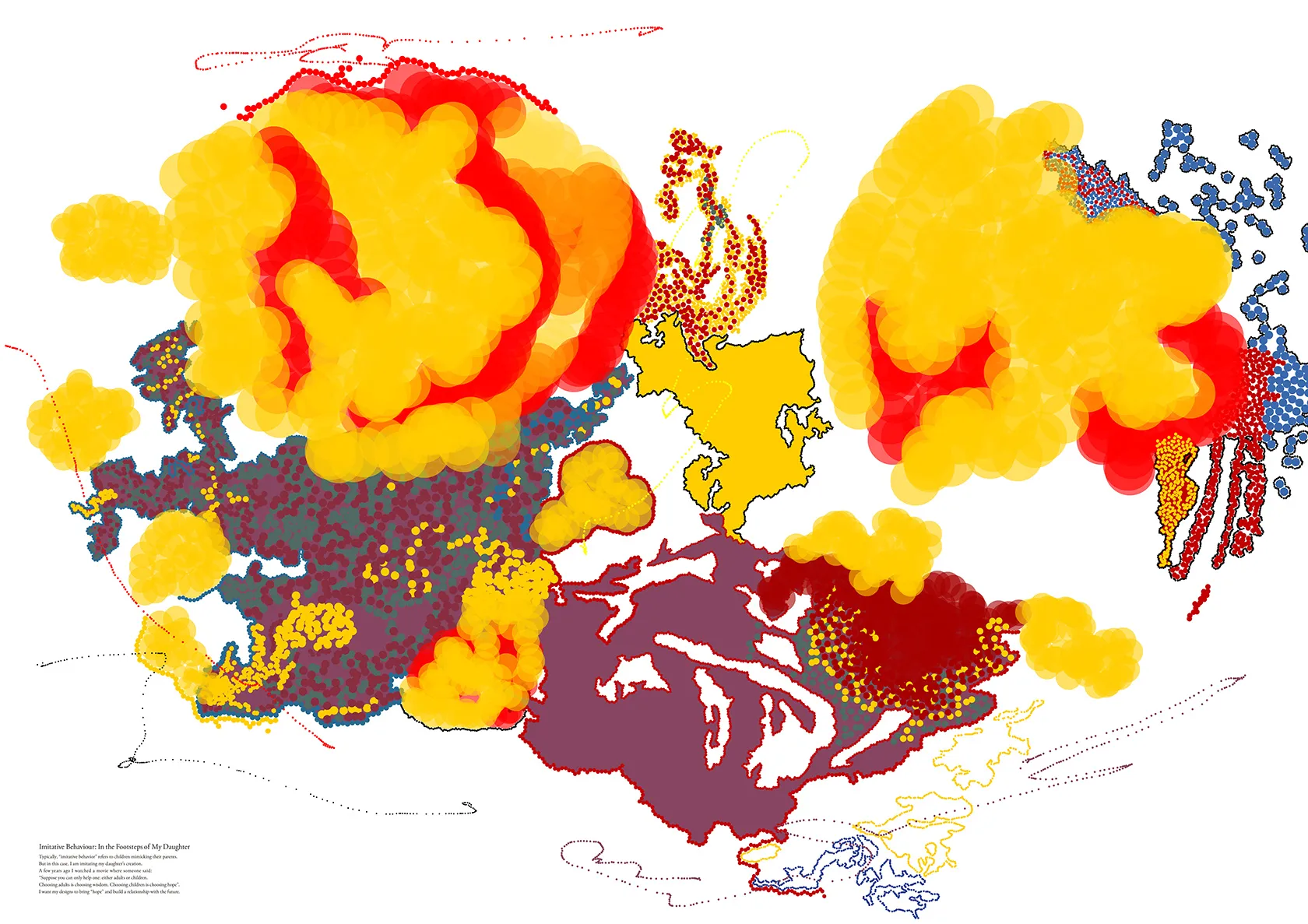
B0-size graphic work based on a painting by Mashiro, reconstructed by Yago using dots.
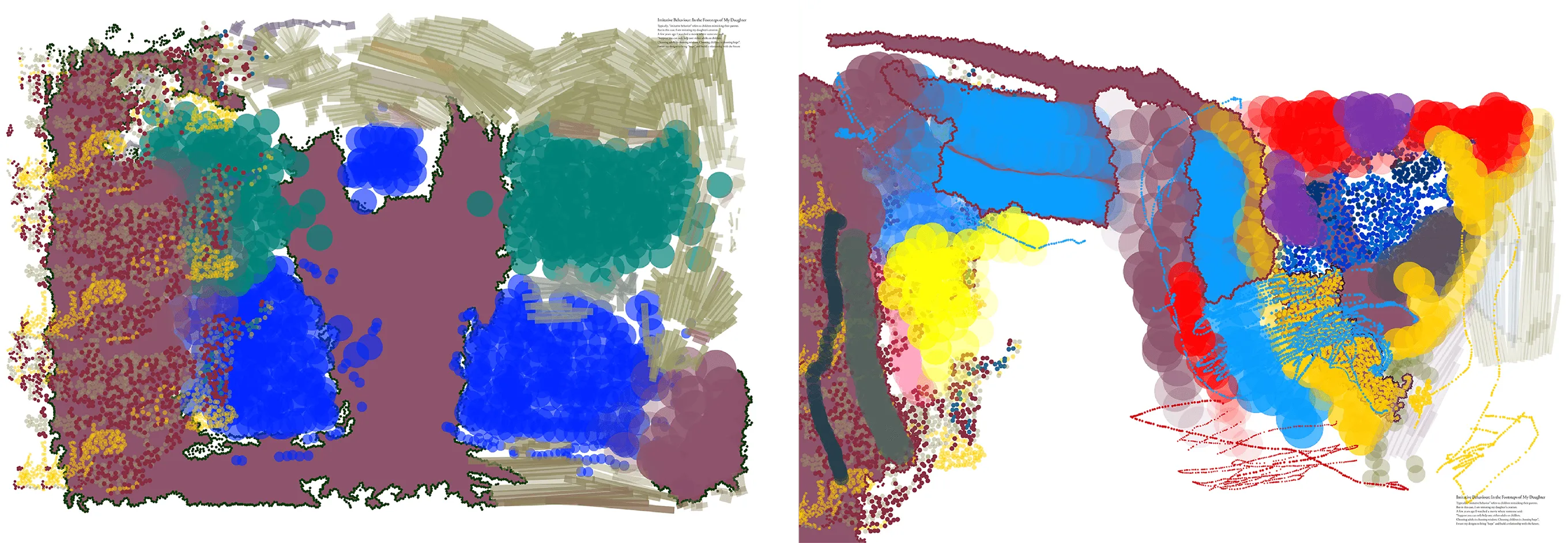
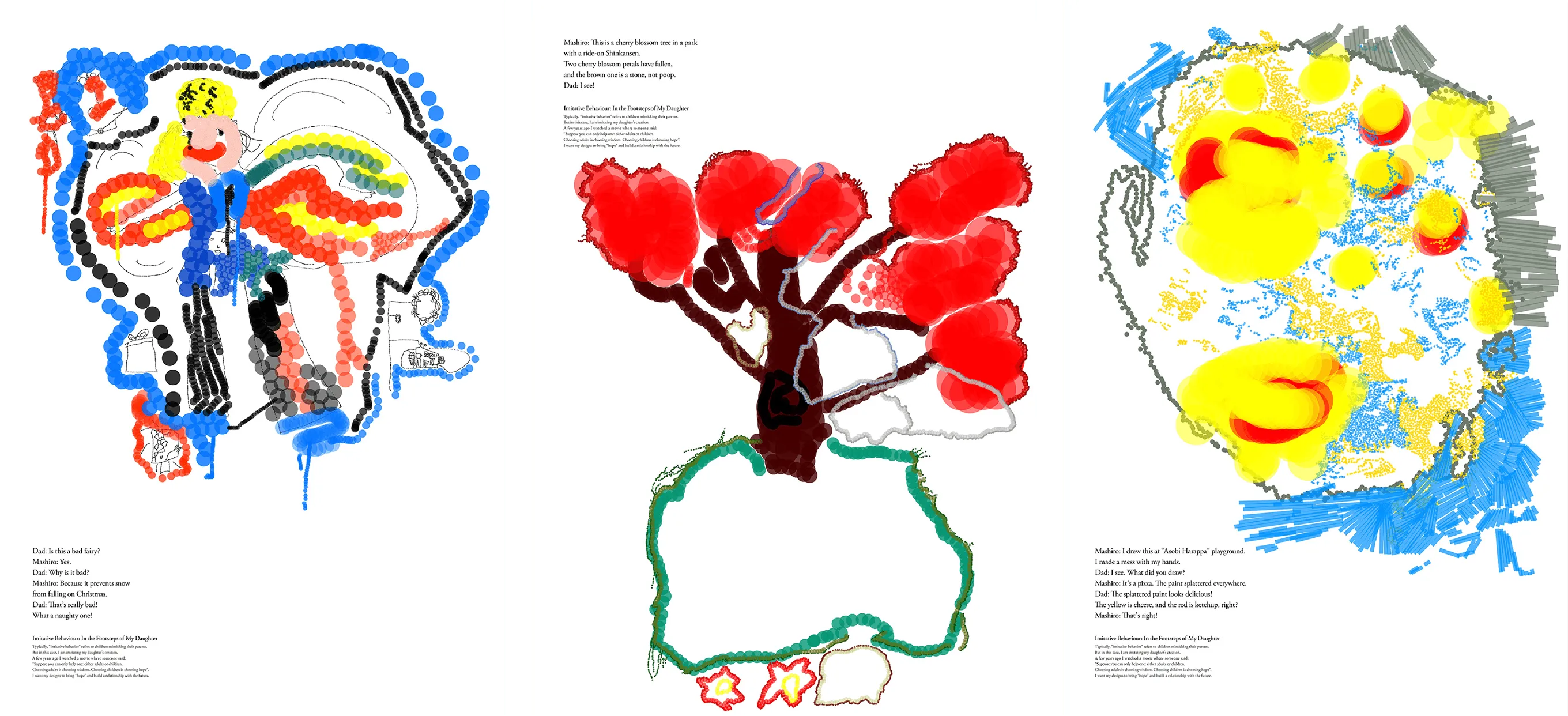
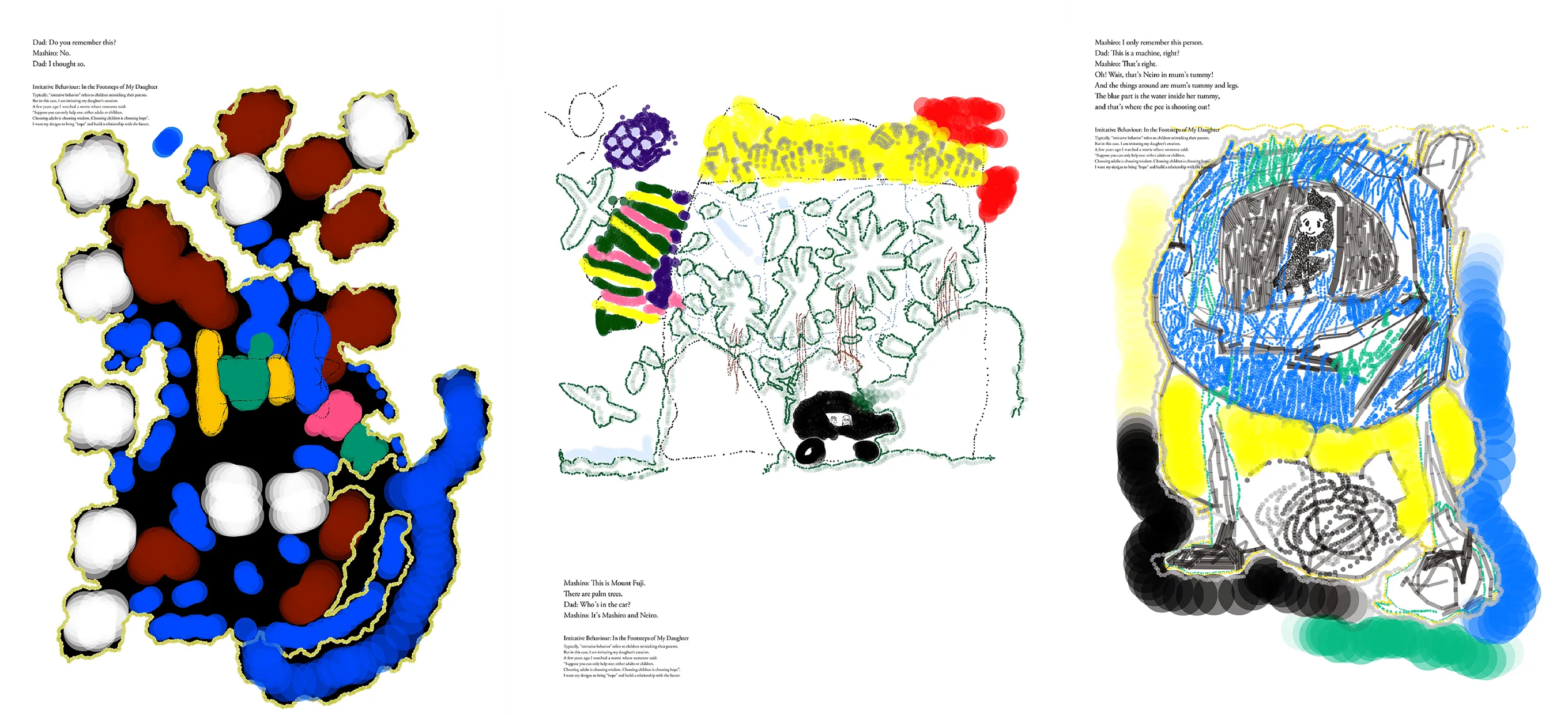
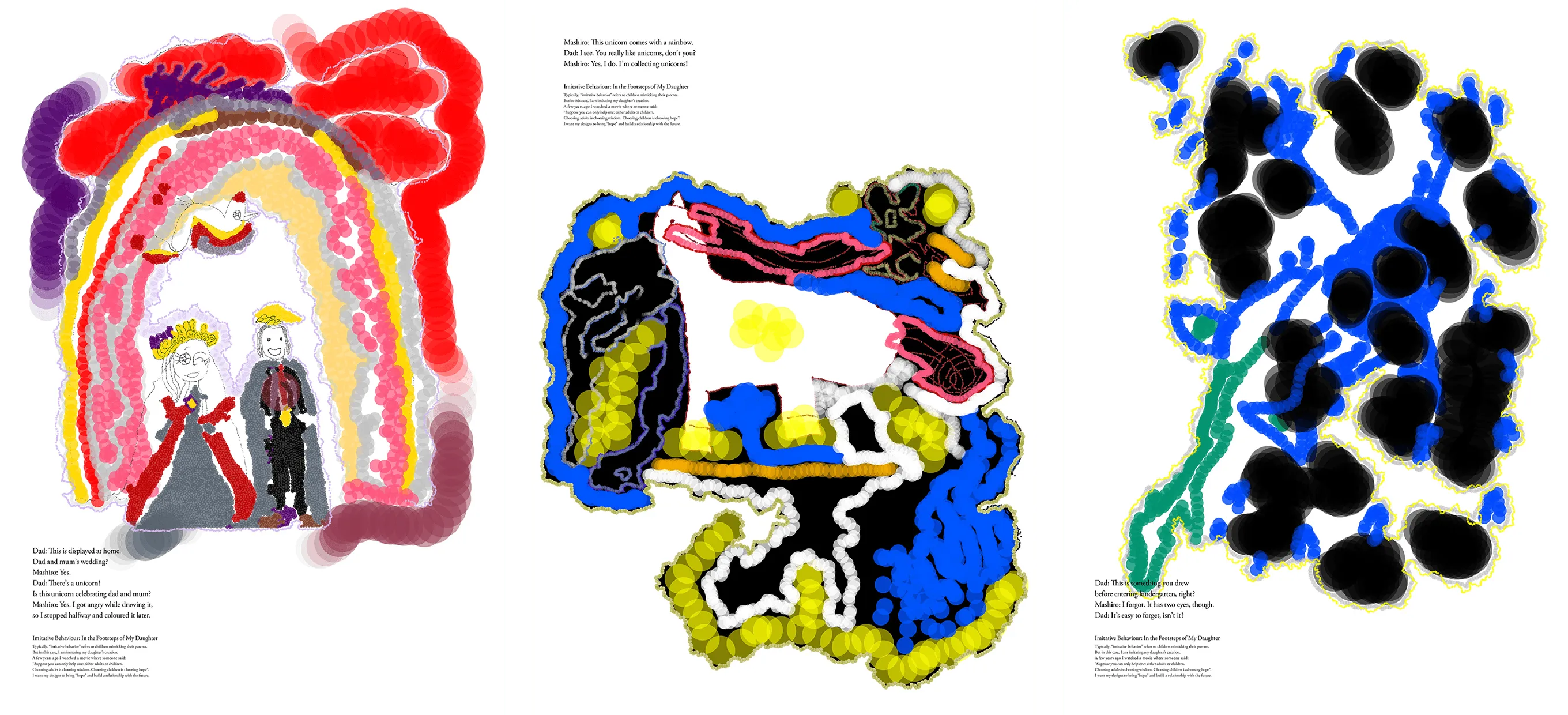
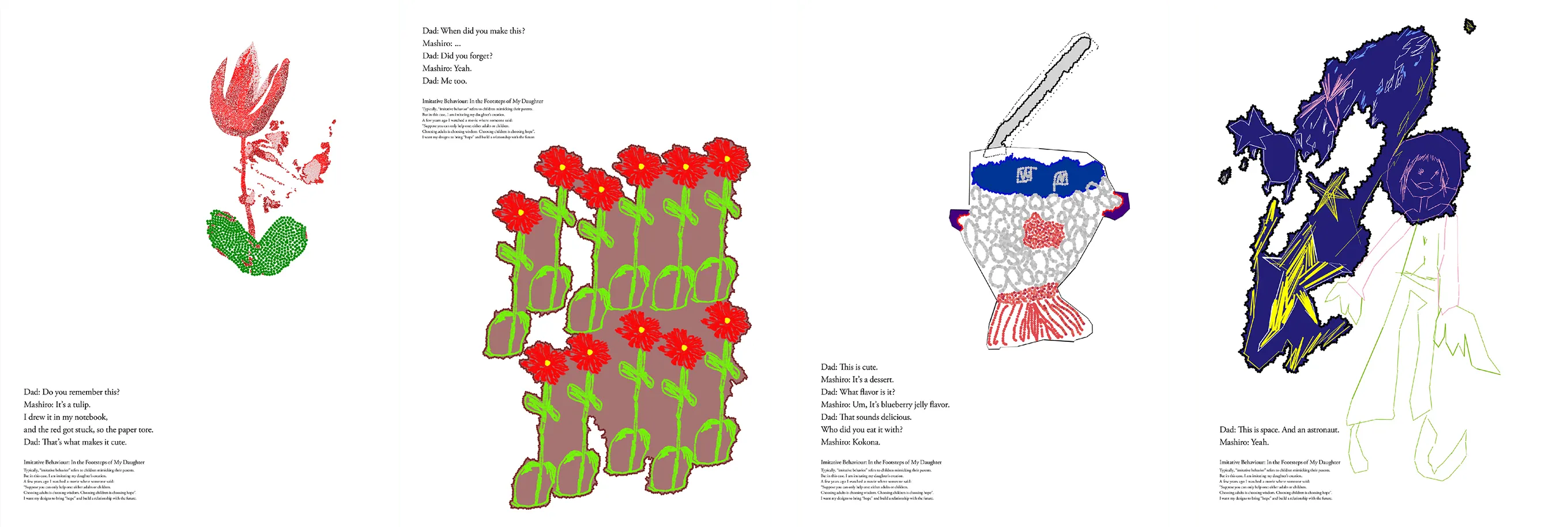
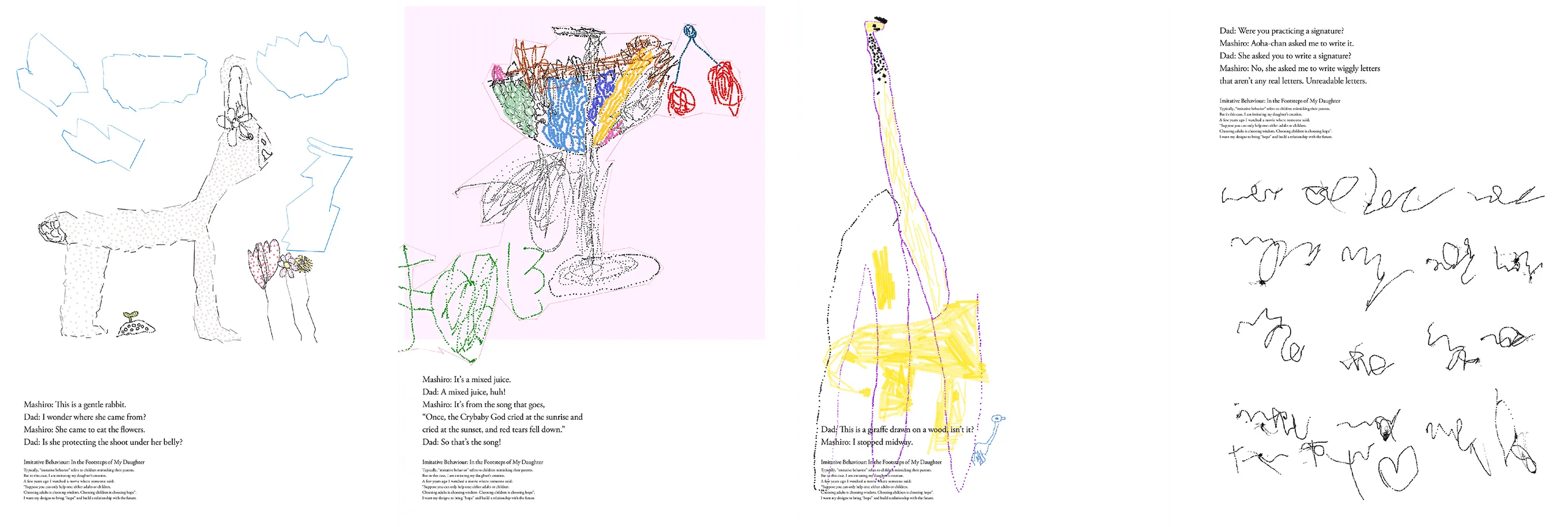
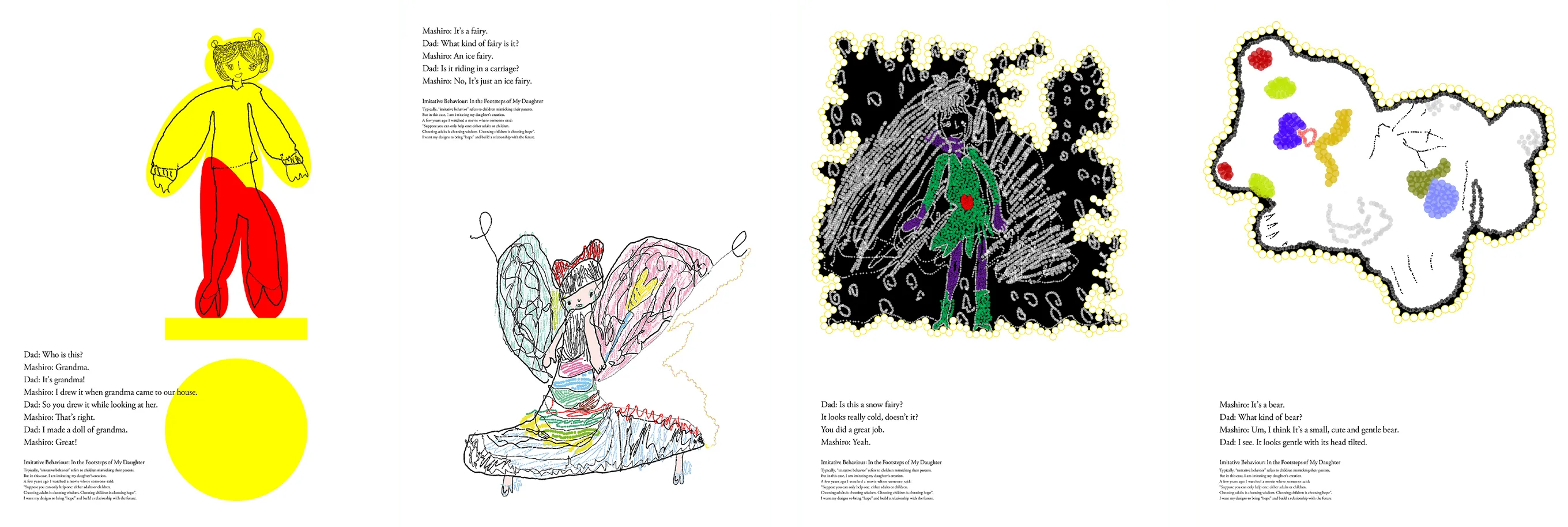
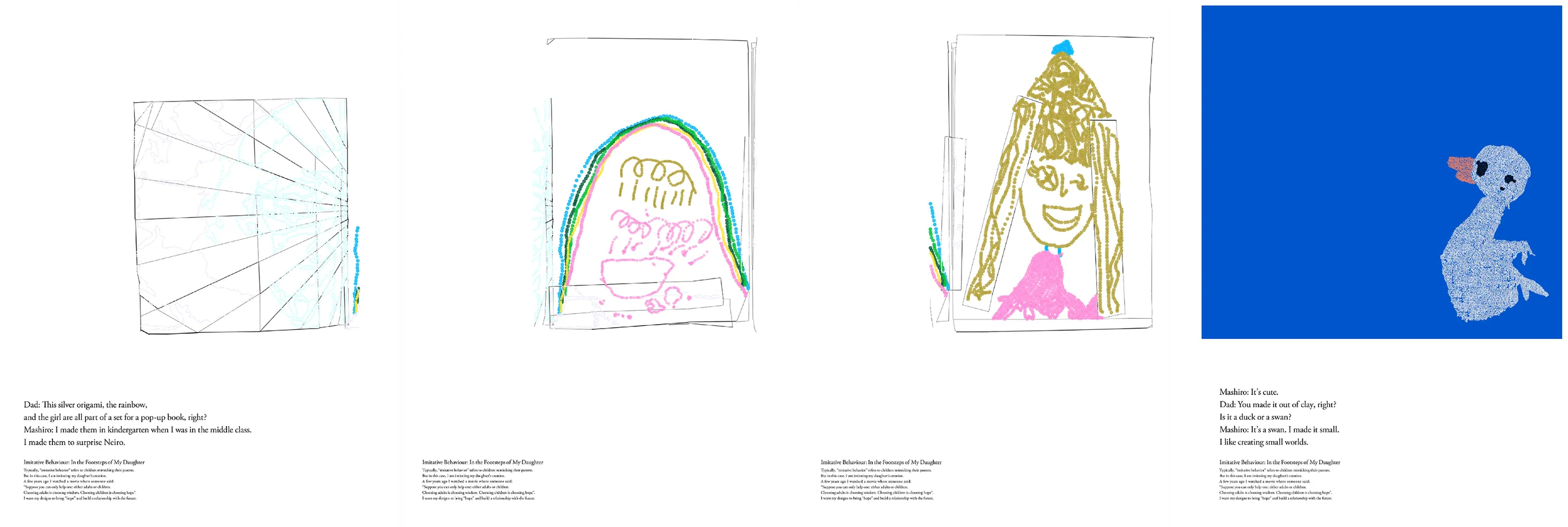
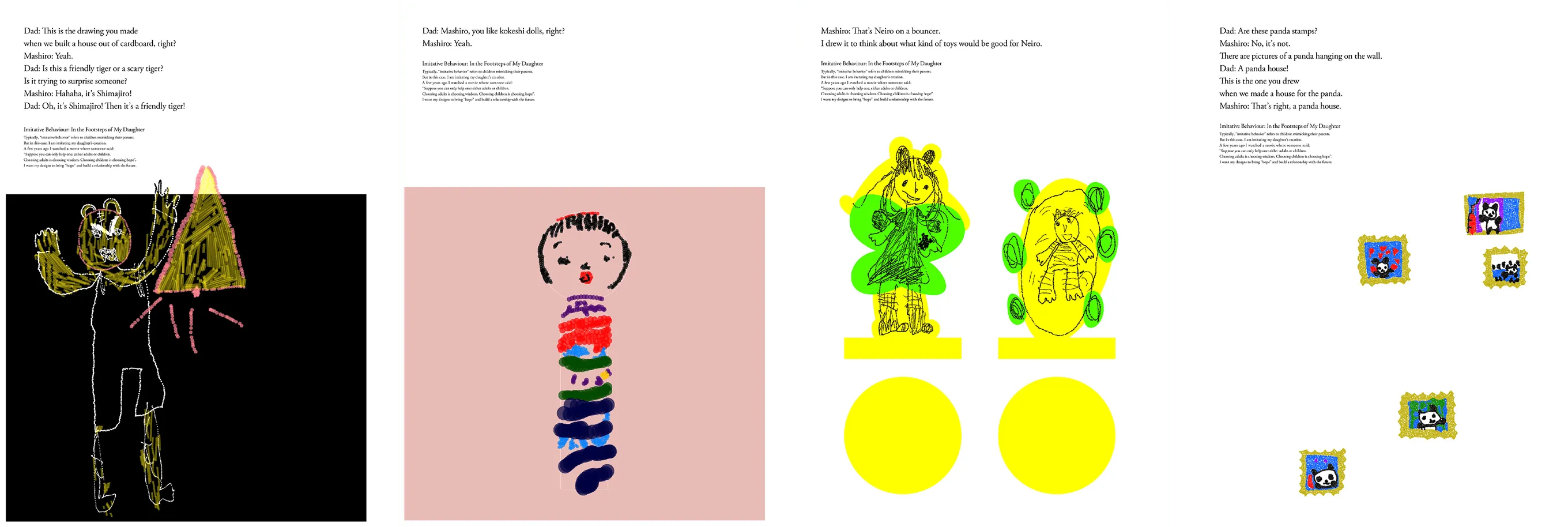
After developing the graphic work, Yago incorporated a dialogue with his daughter Mashiro into the layout.
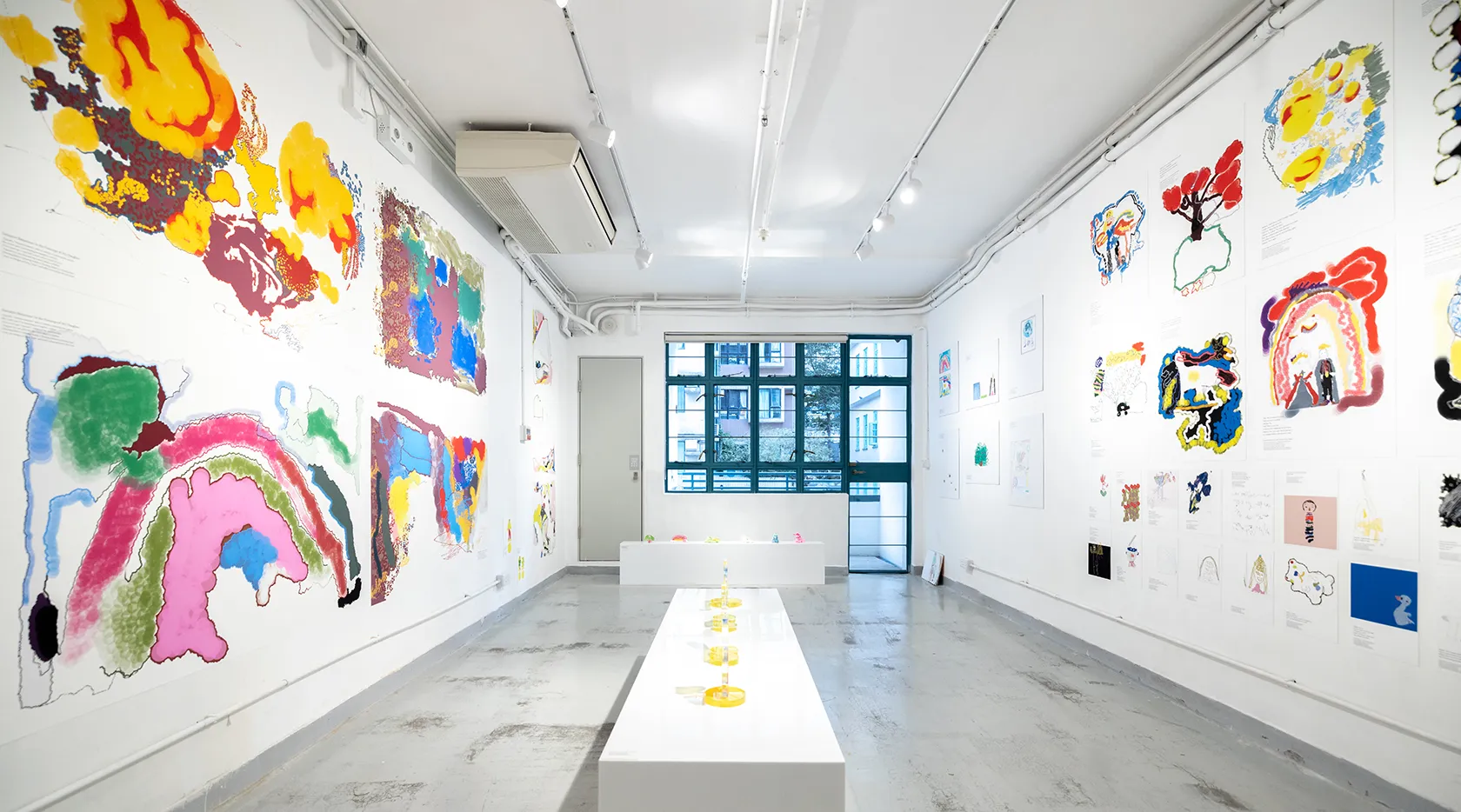
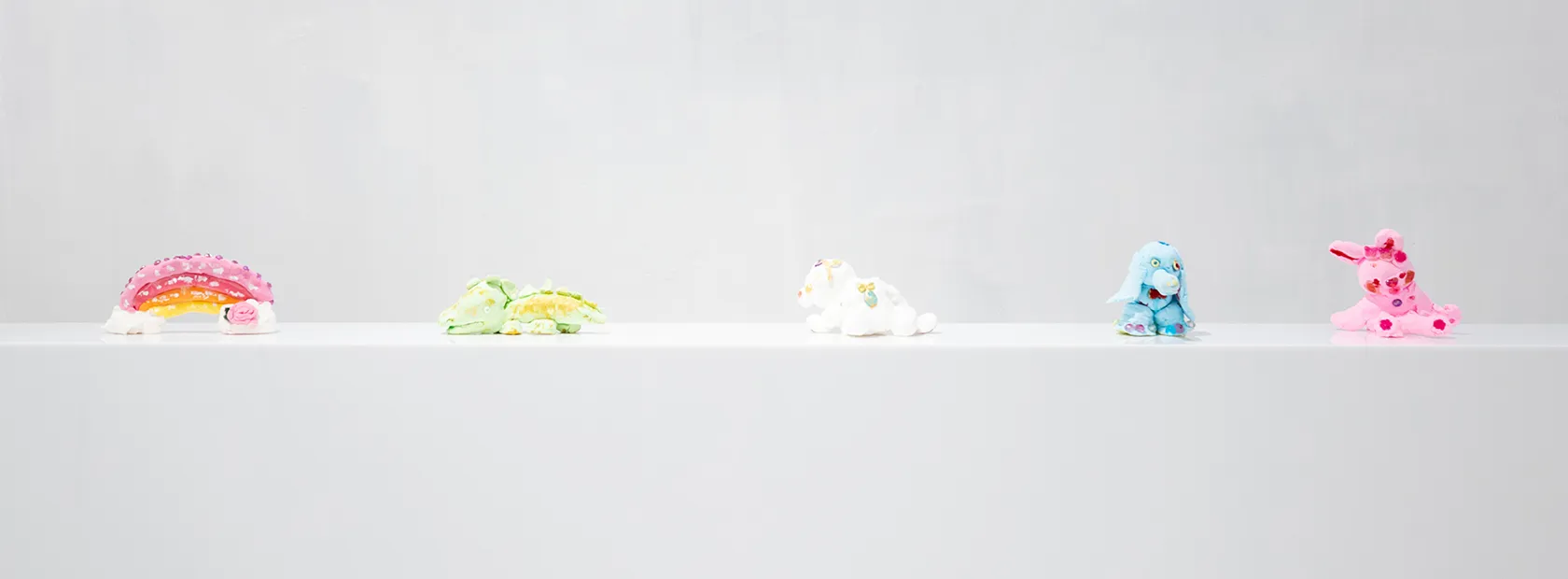
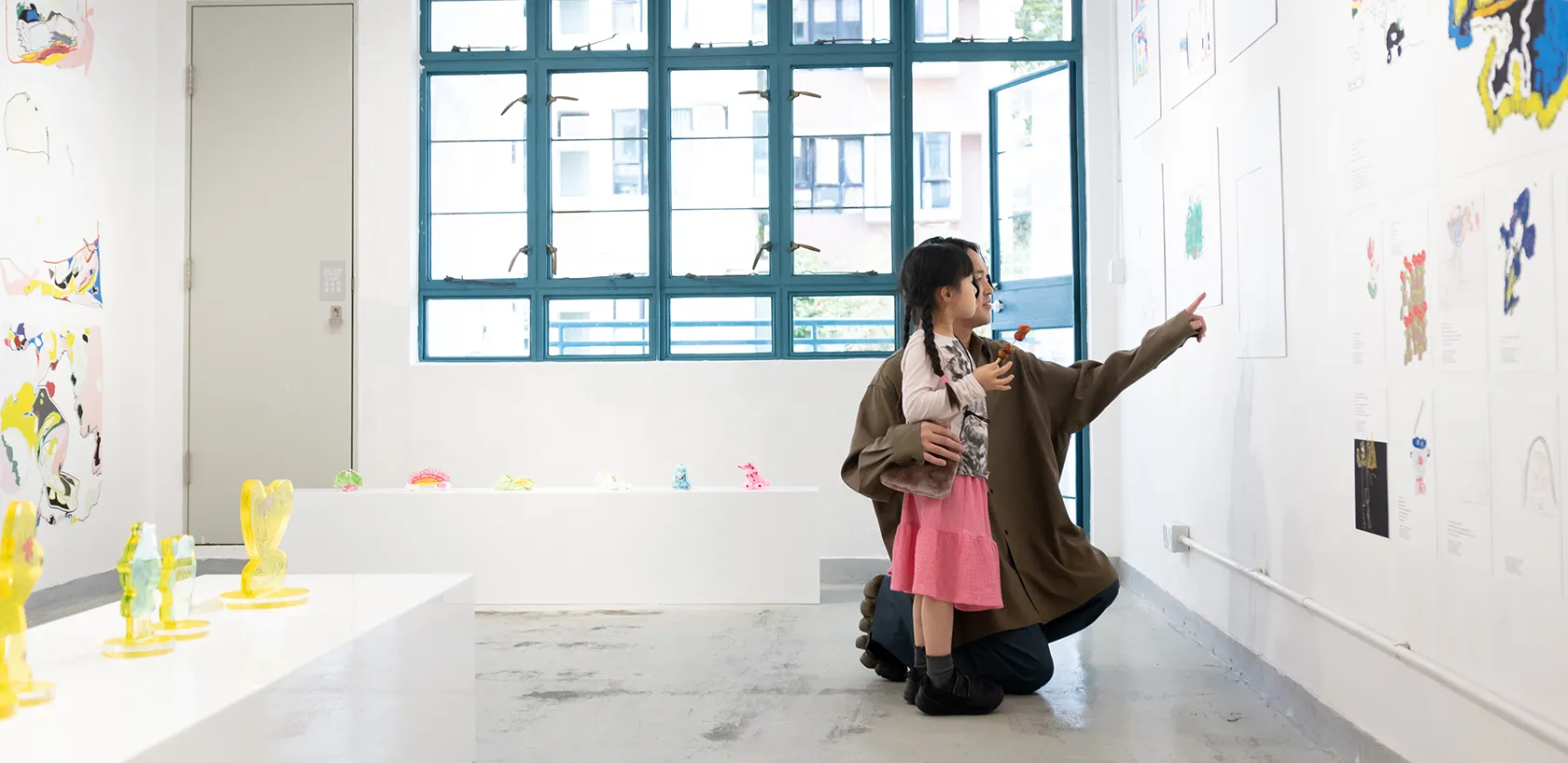
Exhibition by Yago and his daughter Mashiro in Hong Kong, presented at detour, a design event by PMQ. Selected through an open call and developed through presentations to the curators.
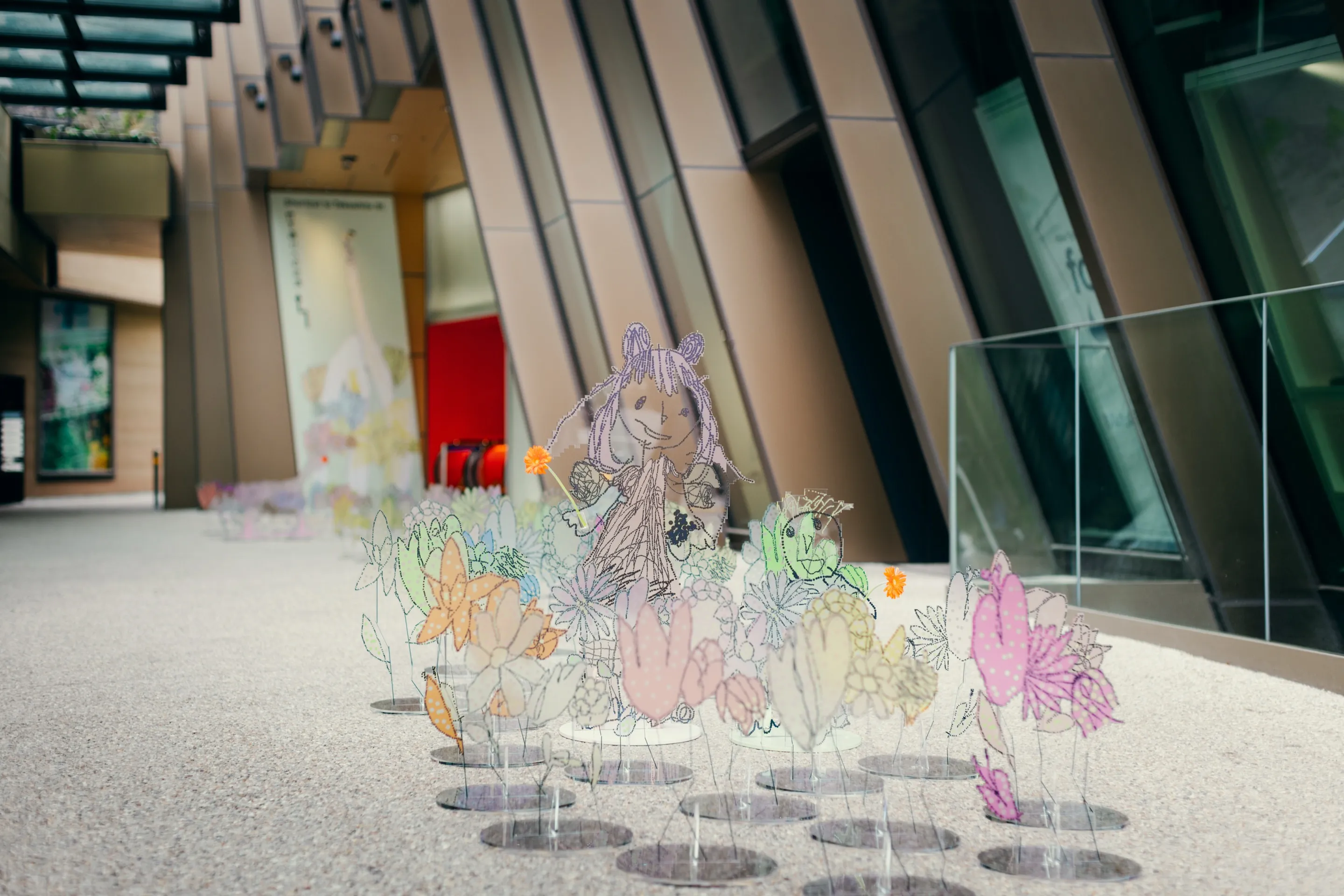
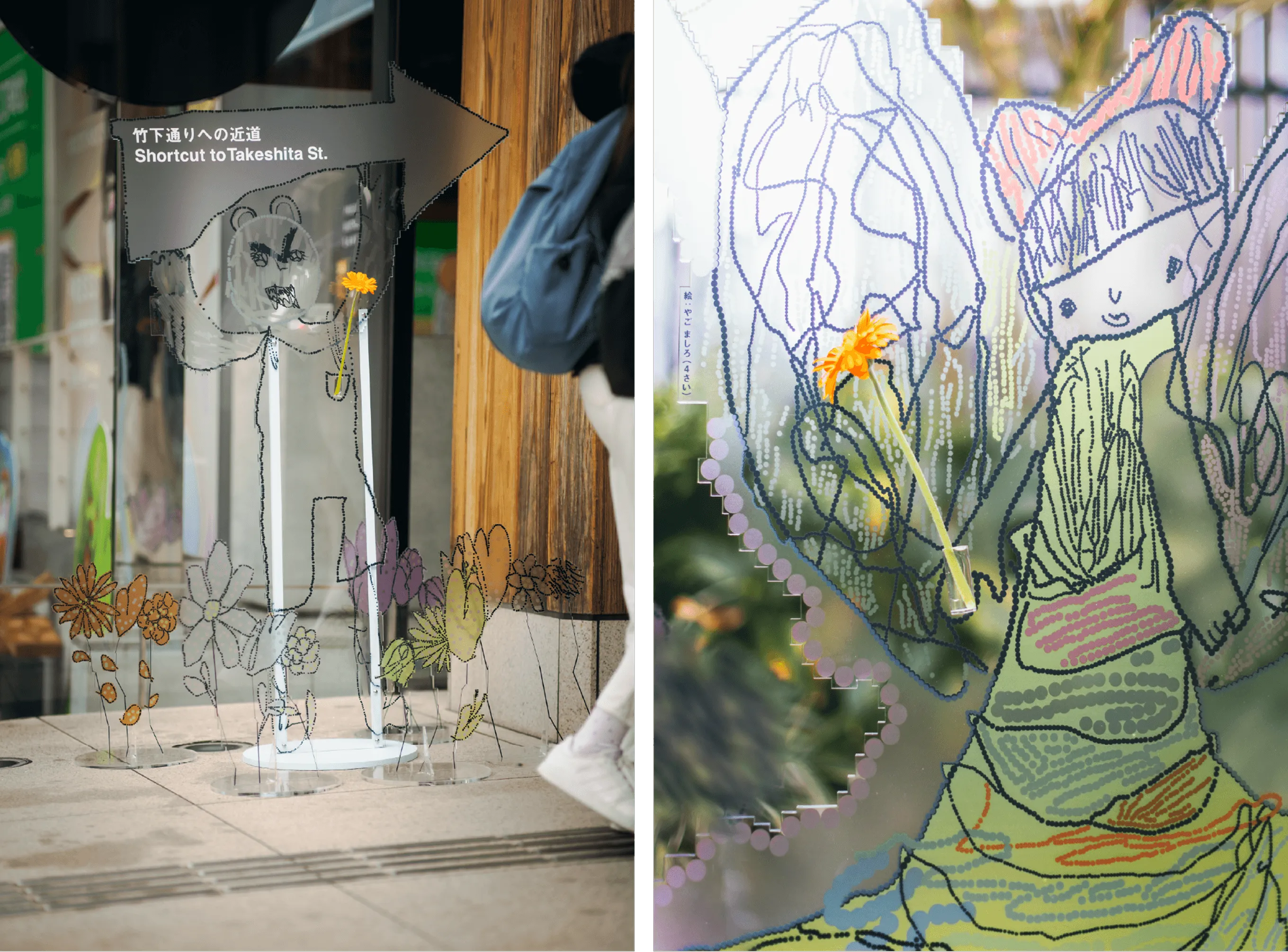
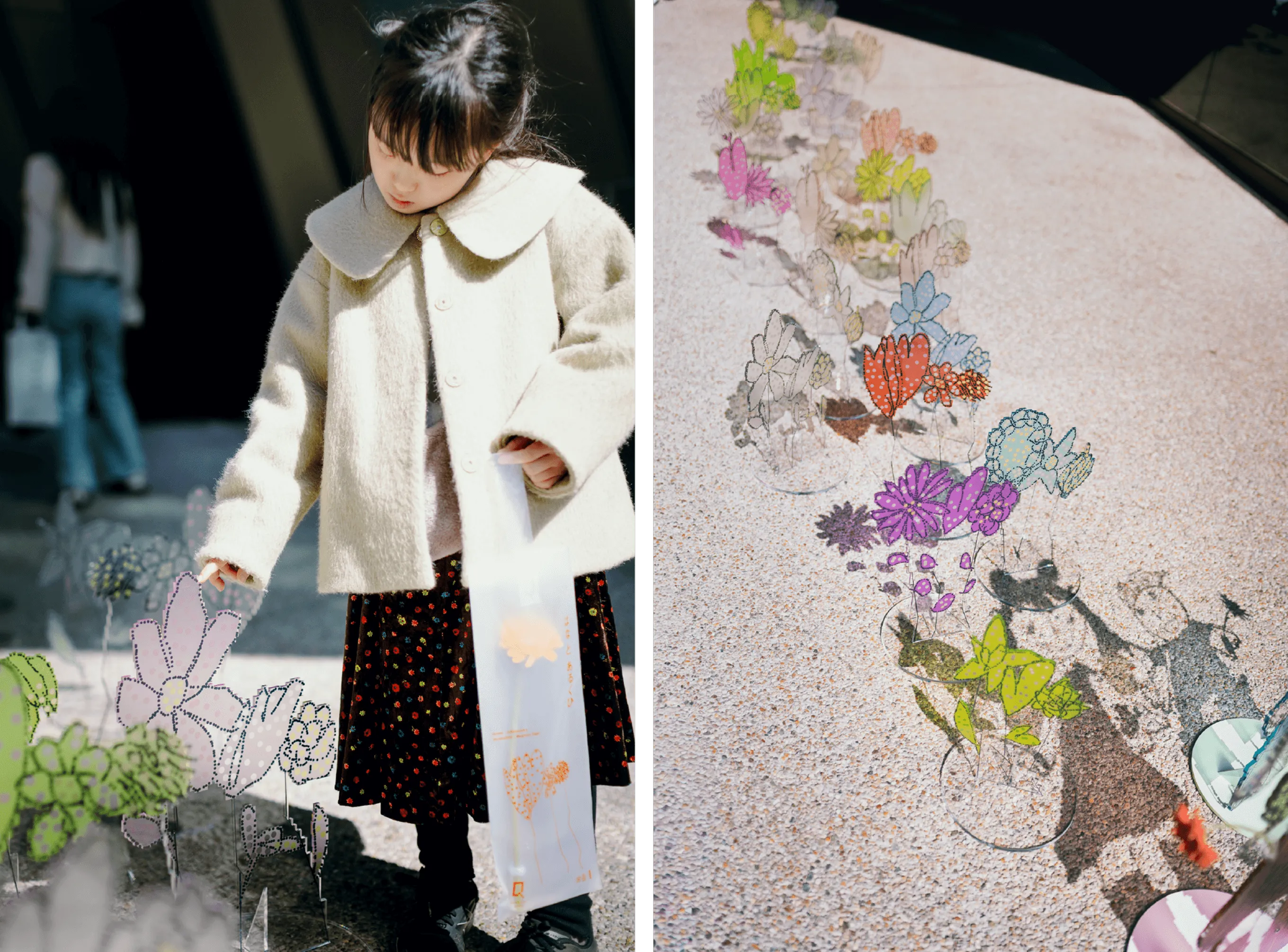
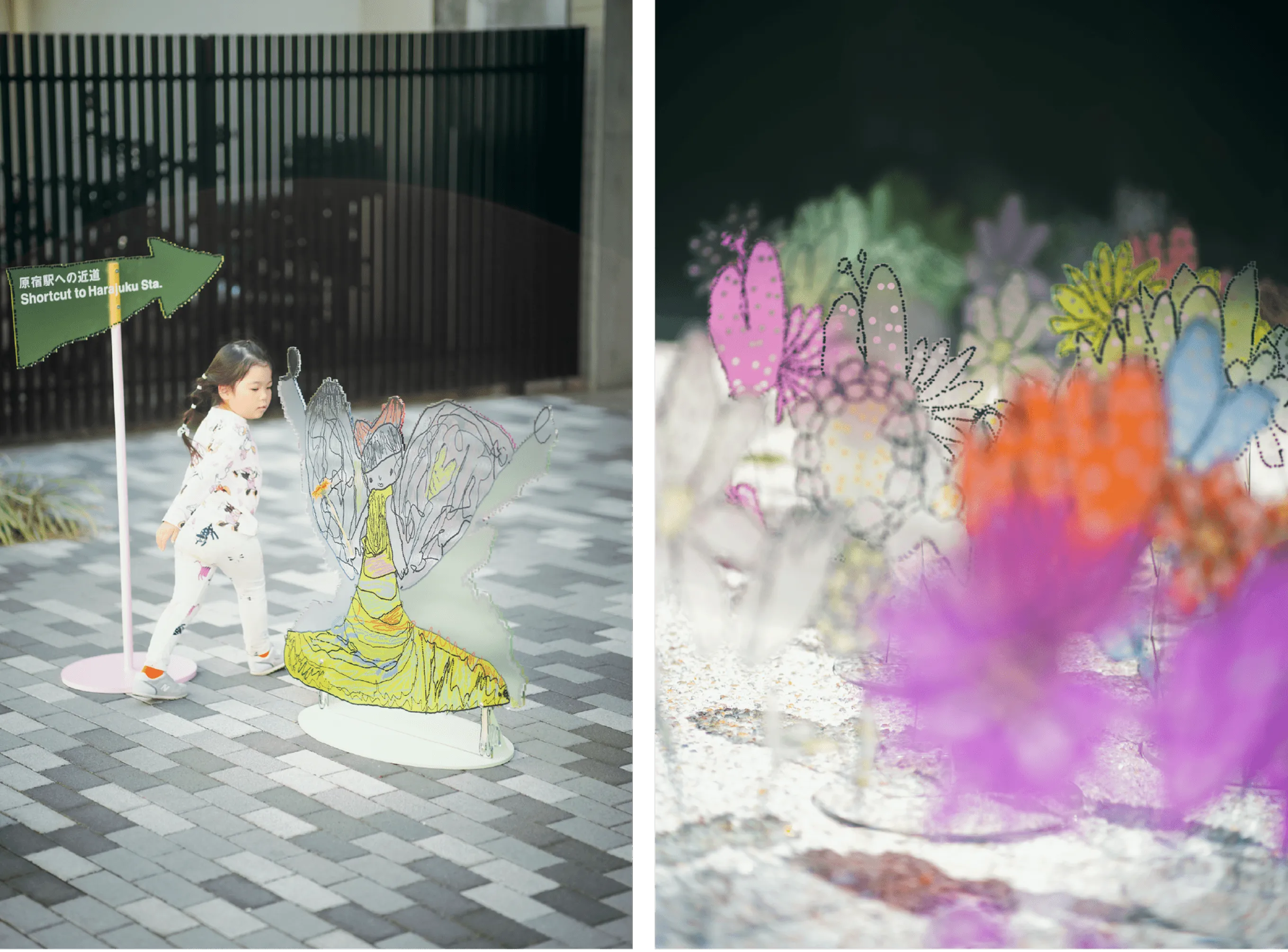
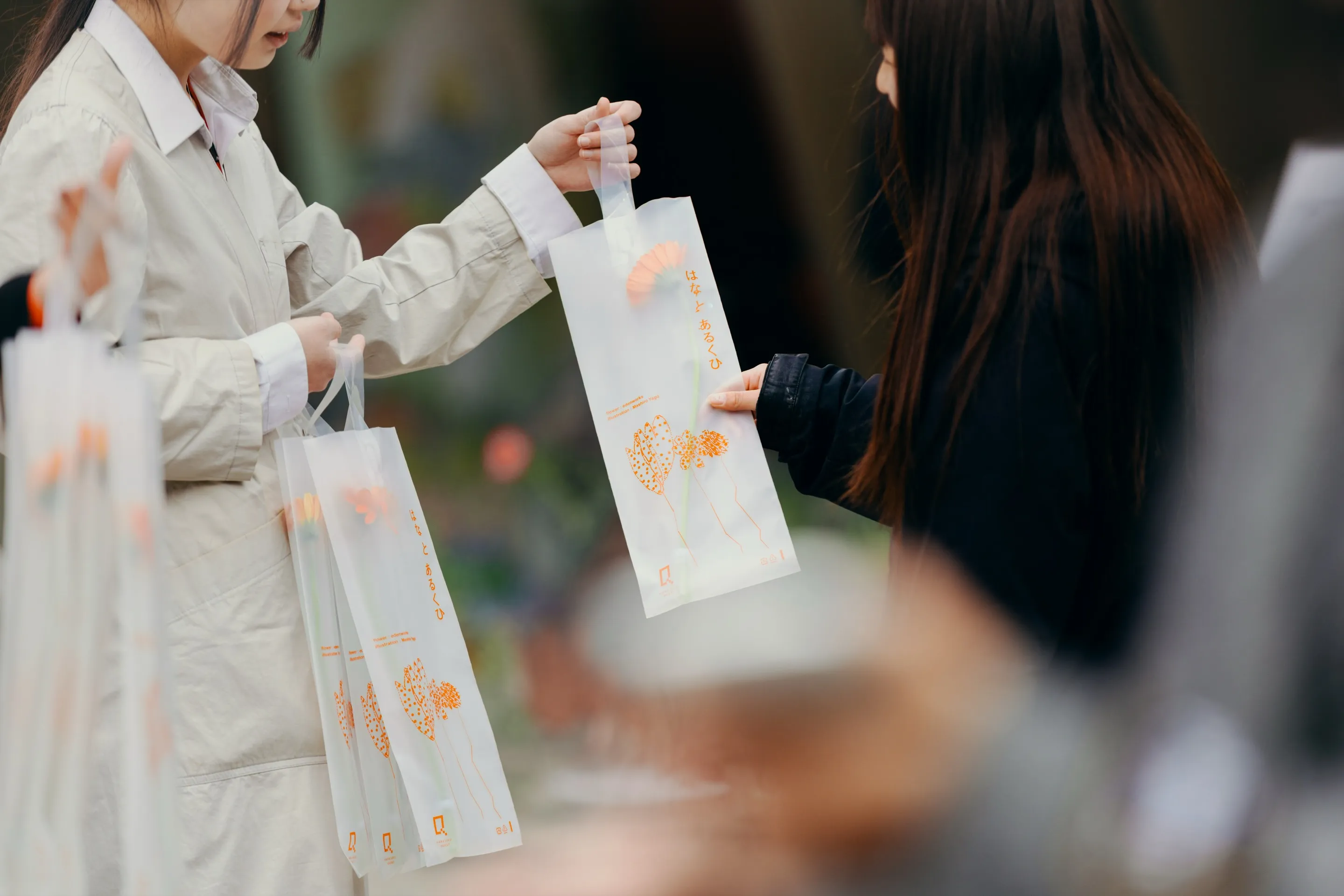
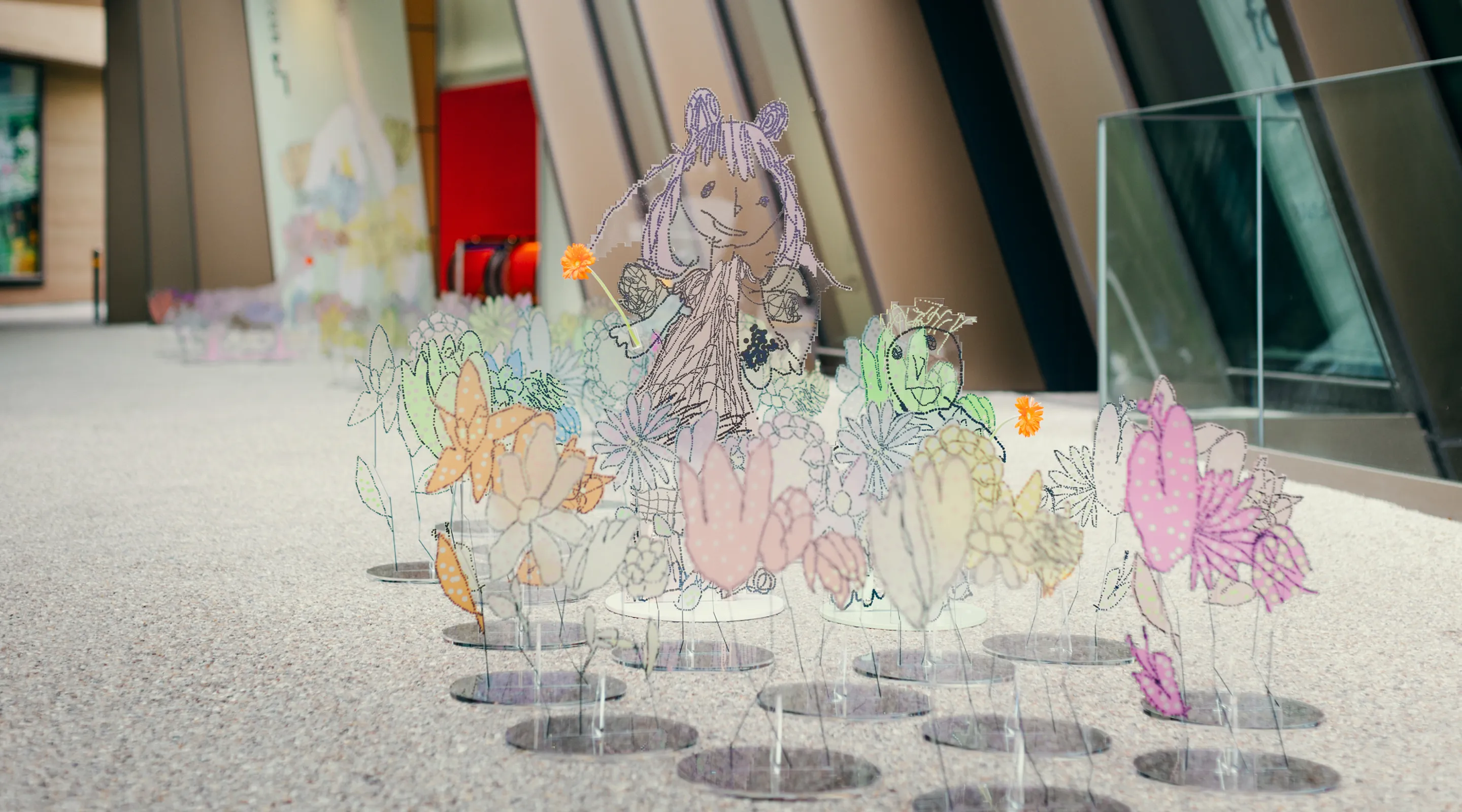
A collaborative event by Harajuku Quest (NTT Urban Development), edenworks, SIX, and Pangraphics. Held on March 13–14, 2026, the event was centered on children and flowers, taking place around the Harajuku Station area. 10,000 flowers were distributed, alongside installations and signage featuring Mashiro's drawings transformed into acrylic objects, activating the streets and bringing vibrancy to the city.
What Adults Can Learn from Children
The works that emerged through this process became our collaborative artworks. I see them as an act of adults imitating and learning from the creativity of children. "Imitative Behaviour" is typically understood in education as a process in which children imitate adults in order to learn something new.
In this project, however, the meaning is reversed. We usually draw inspiration from the past—history, major art movements, and renowned artists. I have done the same throughout my career. Yet in this project, it feels as though I am receiving inspiration from the "future" embodied in children's creativity.
There is a line from a zombie film I watched a few years ago: "If you could save only one—an adult or a child—what would you choose? Choosing an adult means choosing wisdom. Choosing a child means choosing hope." I realized that I would choose the child. In 2022, I presented the first collaborative work with Mashiro in an exhibition in Taiwan under the theme of "HOPE."
A Challenge I Felt in Graphic Design
Before this project, I had been questioning the nature of design created on the computer. The basic geometric forms and lines produced digitally often felt inevitably generic—something anyone could make. While working on a computer allows for a high level of efficiency in composition and editing—especially in layout involving typography and photography, enabling extensive exploration and refinement—I felt that, in terms of form-making, the mathematically derived precision of digital lines was, in some ways, limiting my own creative exploration. In that sense, this project became a significant breakthrough in my practice.
Graphic design fundamentally demands simplification. Yet at times, I began to wonder whether this process might strip away even the identity of the work itself. In the graphic design field, the term "stripping away" is often used to describe a process of reduction. However, what I have been attempting here feels closer to "compression." When a sculpture is carved away, it is difficult to imagine what has been removed. But with a compressed image, even when details are lost or obscured, one can still sense and imagine what those details once were.
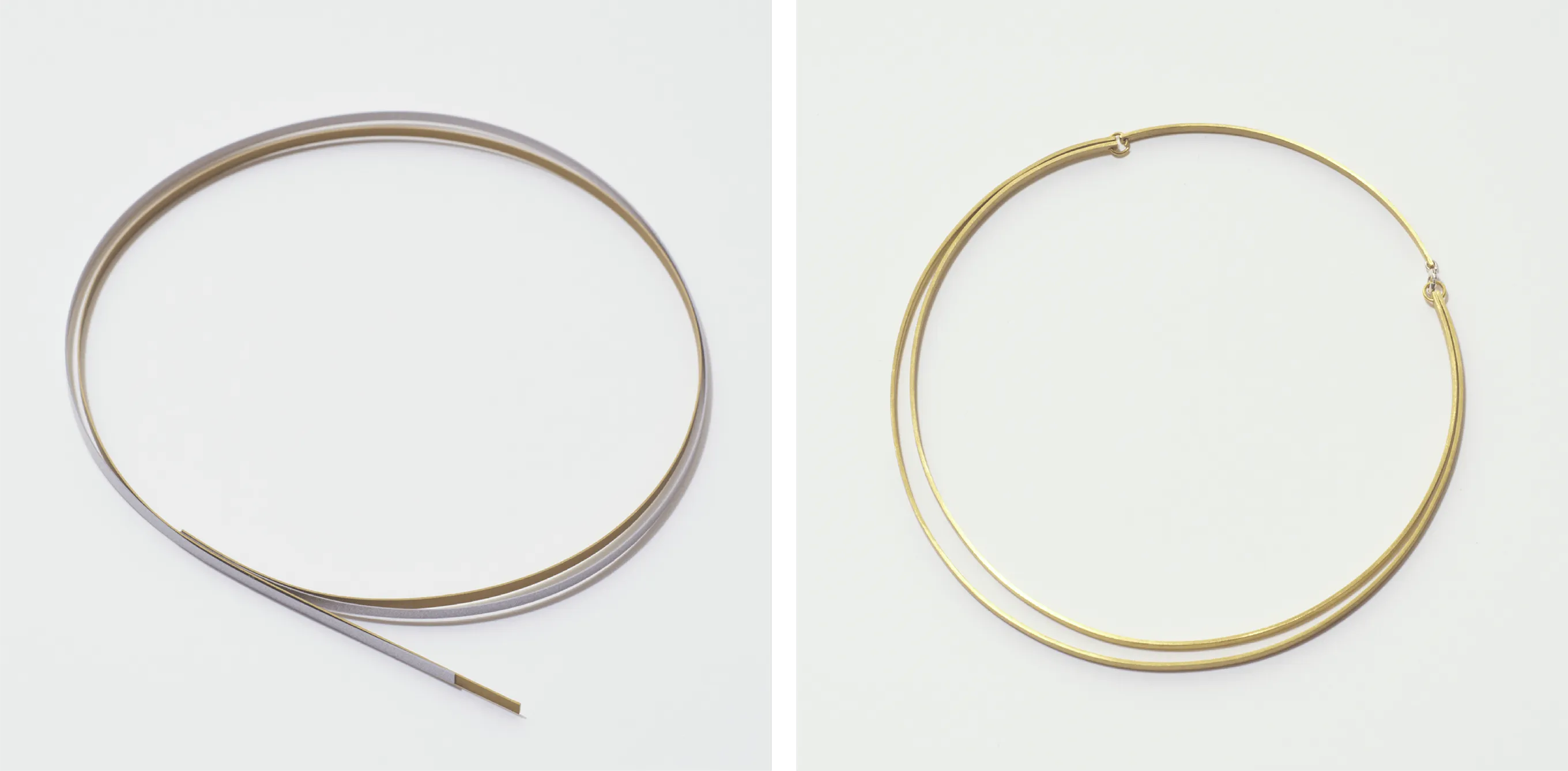
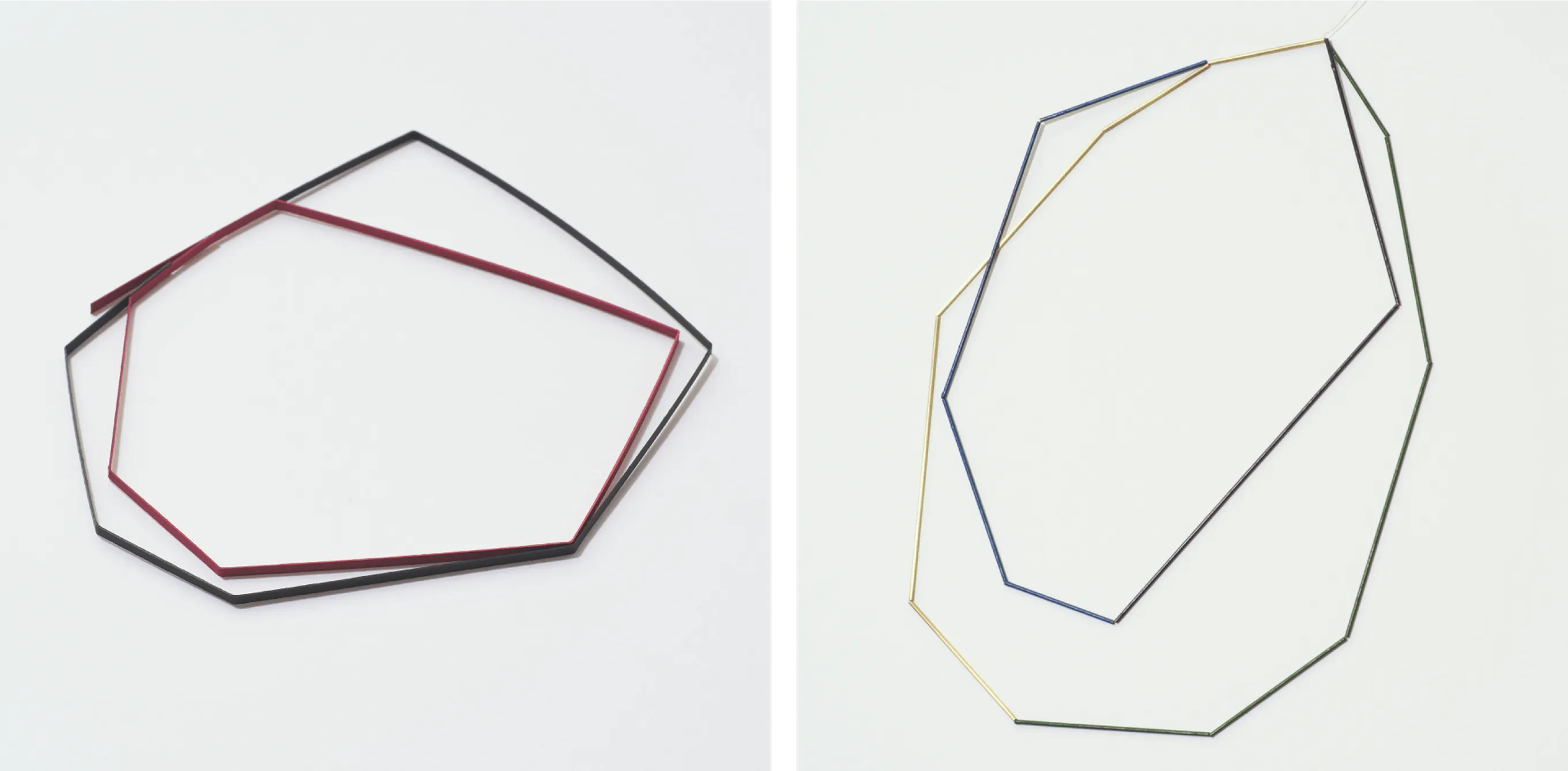
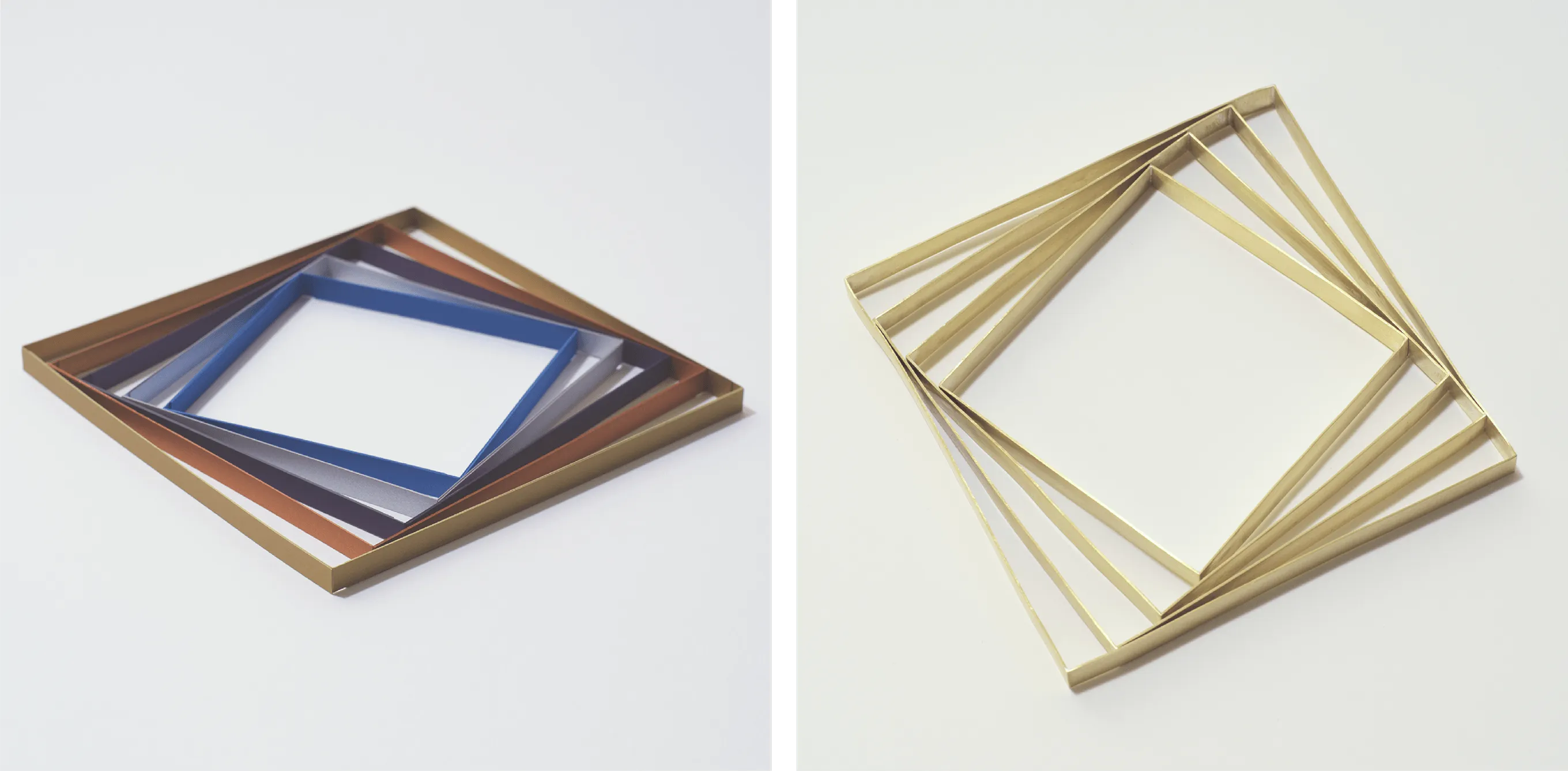
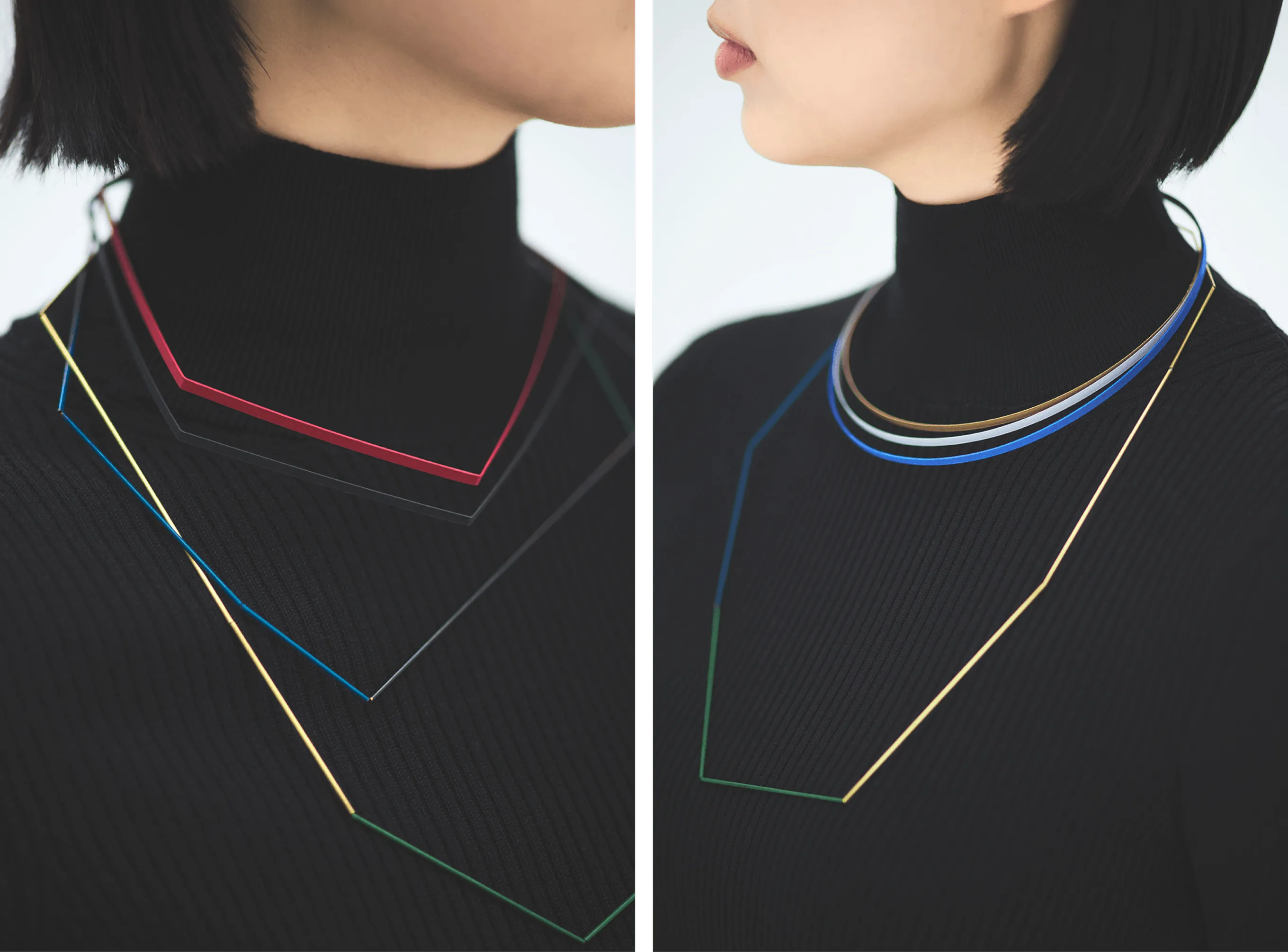
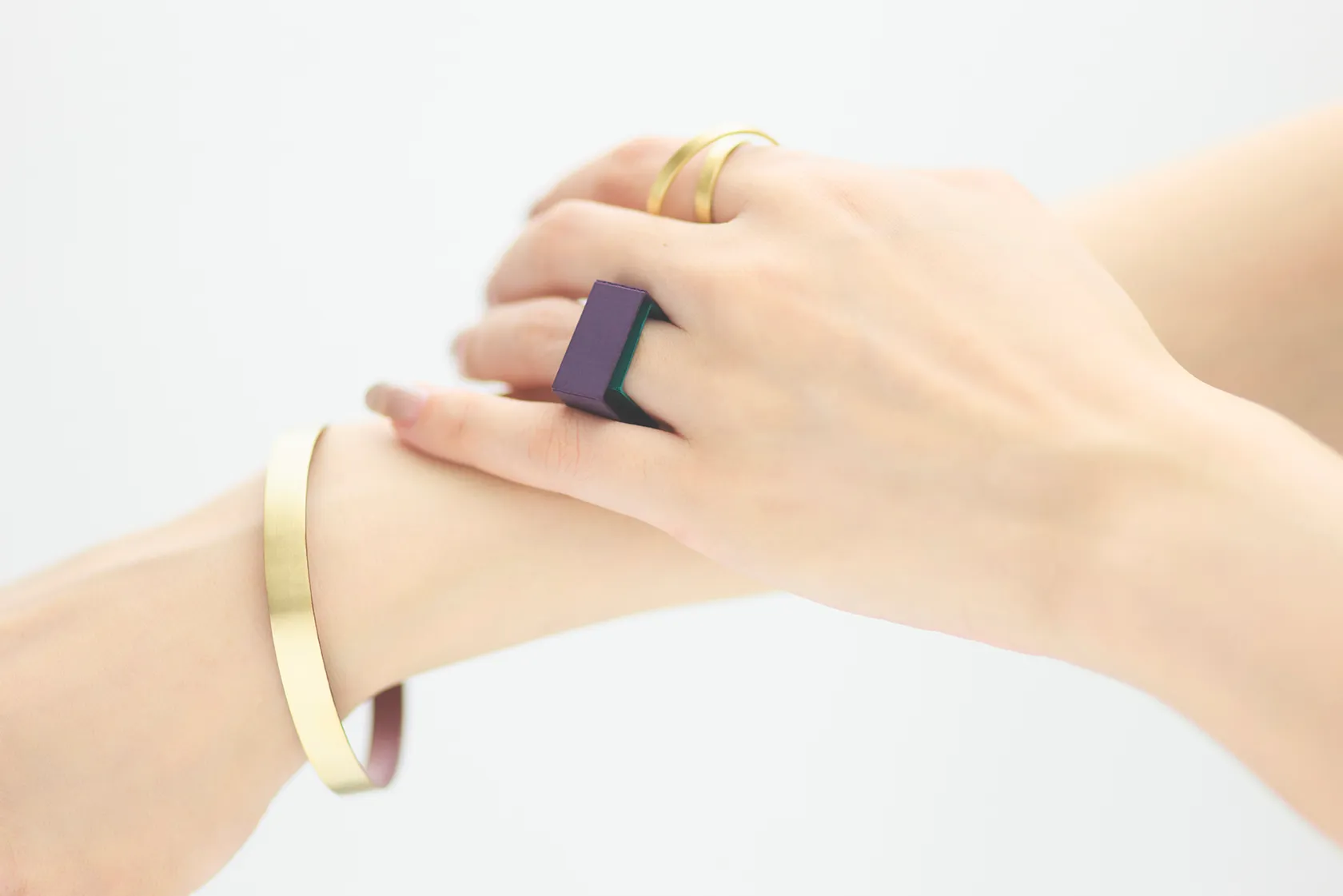
Exhibition of paper accessories at Takeo Paper Showroom (Aoyama). Inspired by Yago's daughters, Mashiro and Neiro, the project reimagined their handmade paper accessories into designs for adults. These were later translated into brass pieces by contemporary jewelry studio SO/OBJECTS and produced as wearable objects.
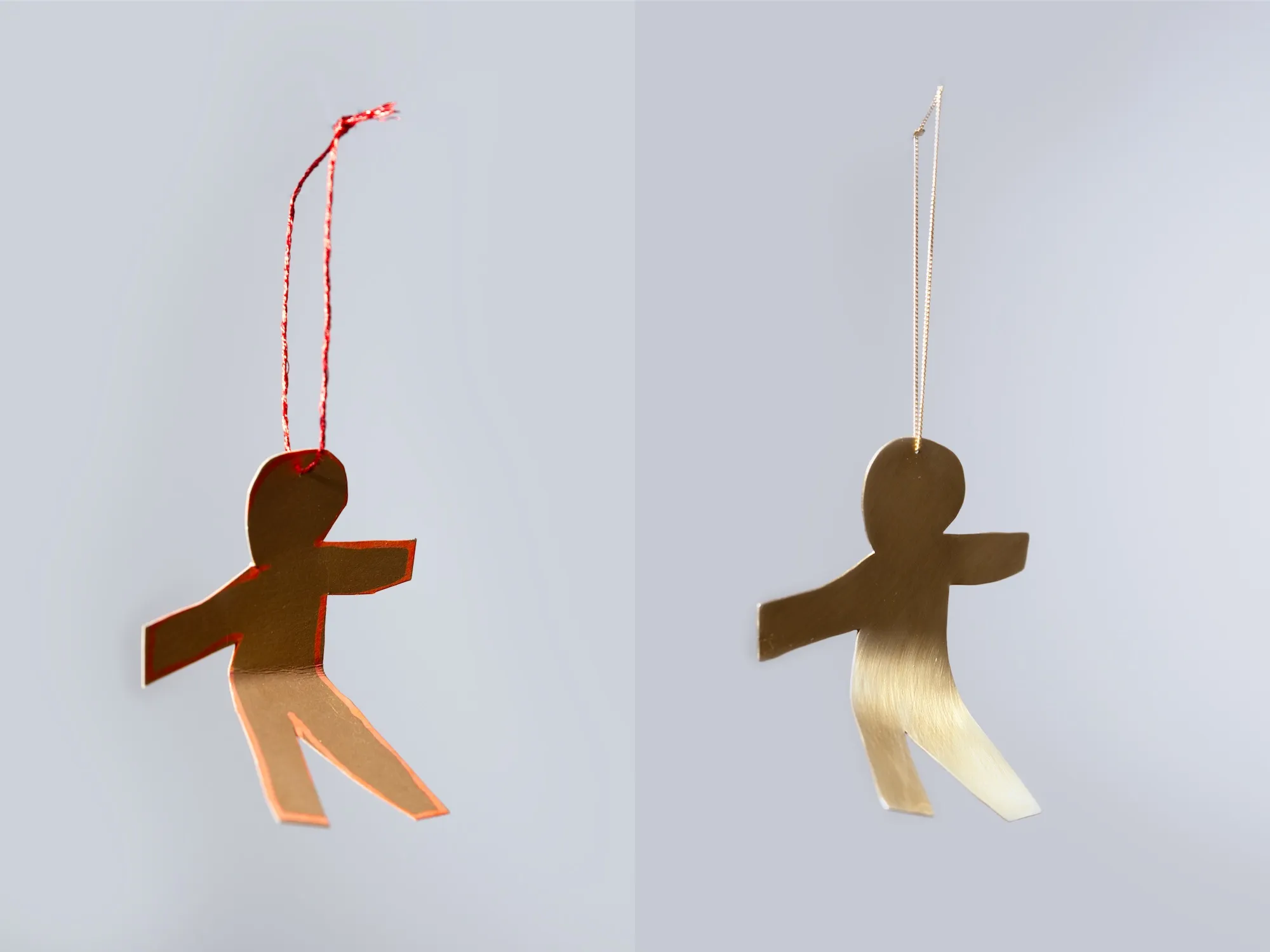
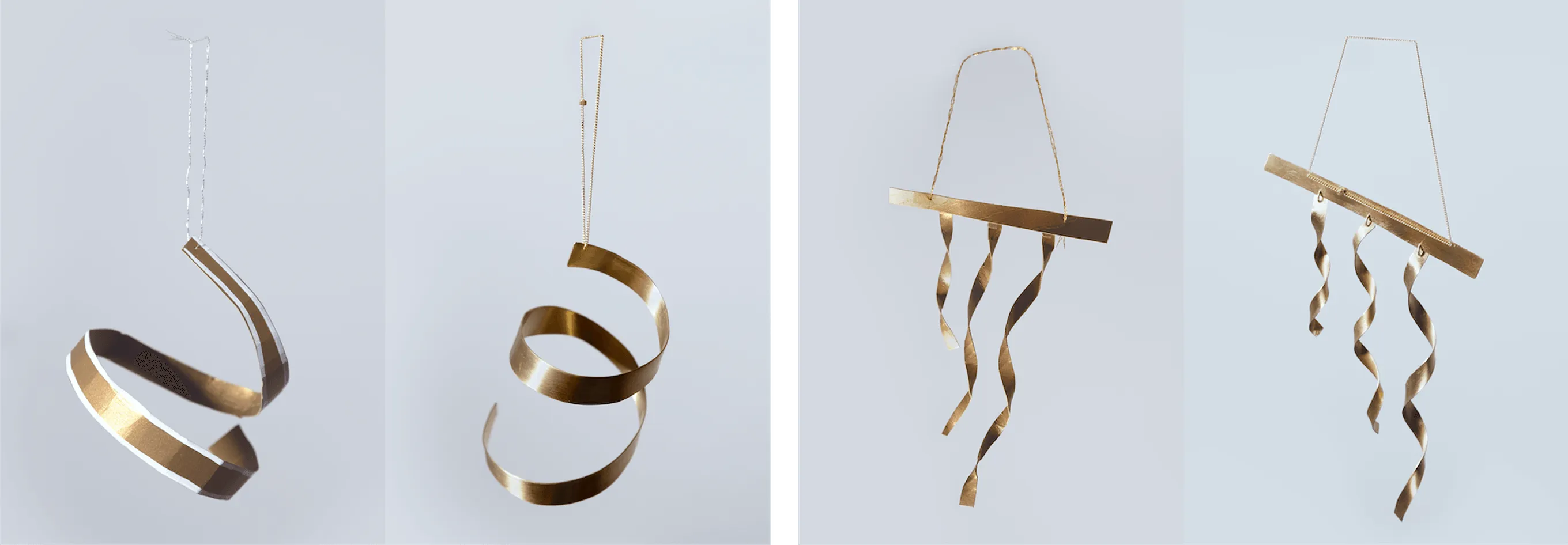
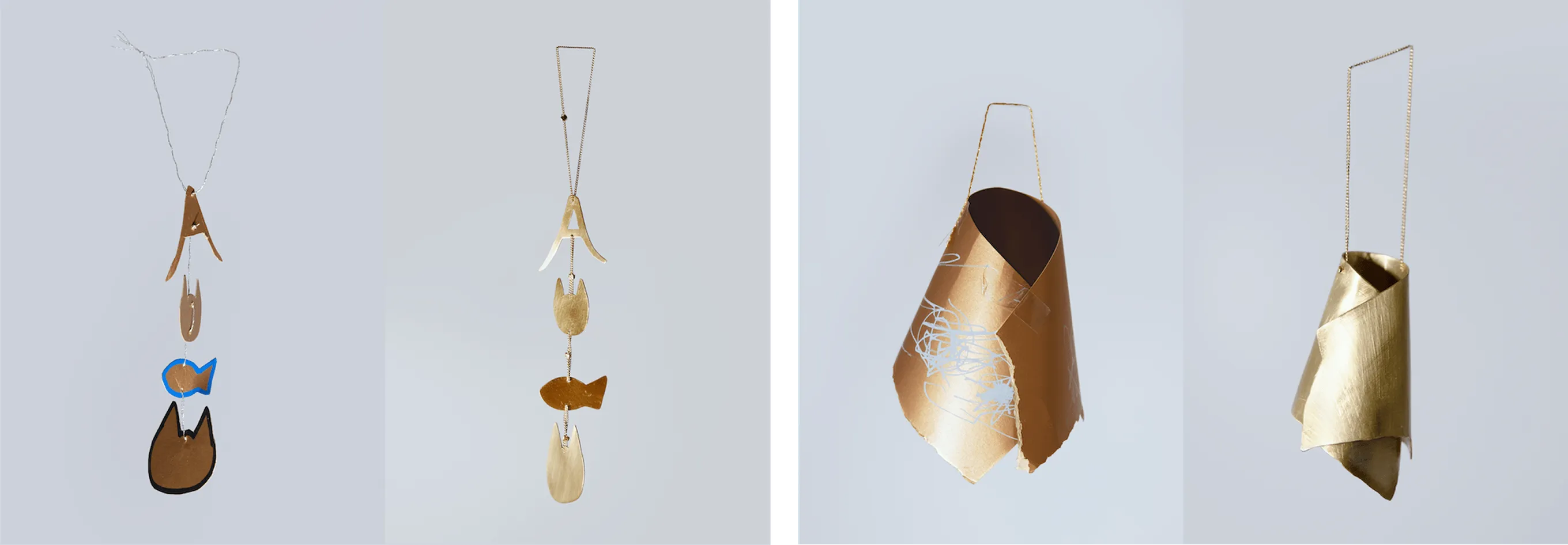
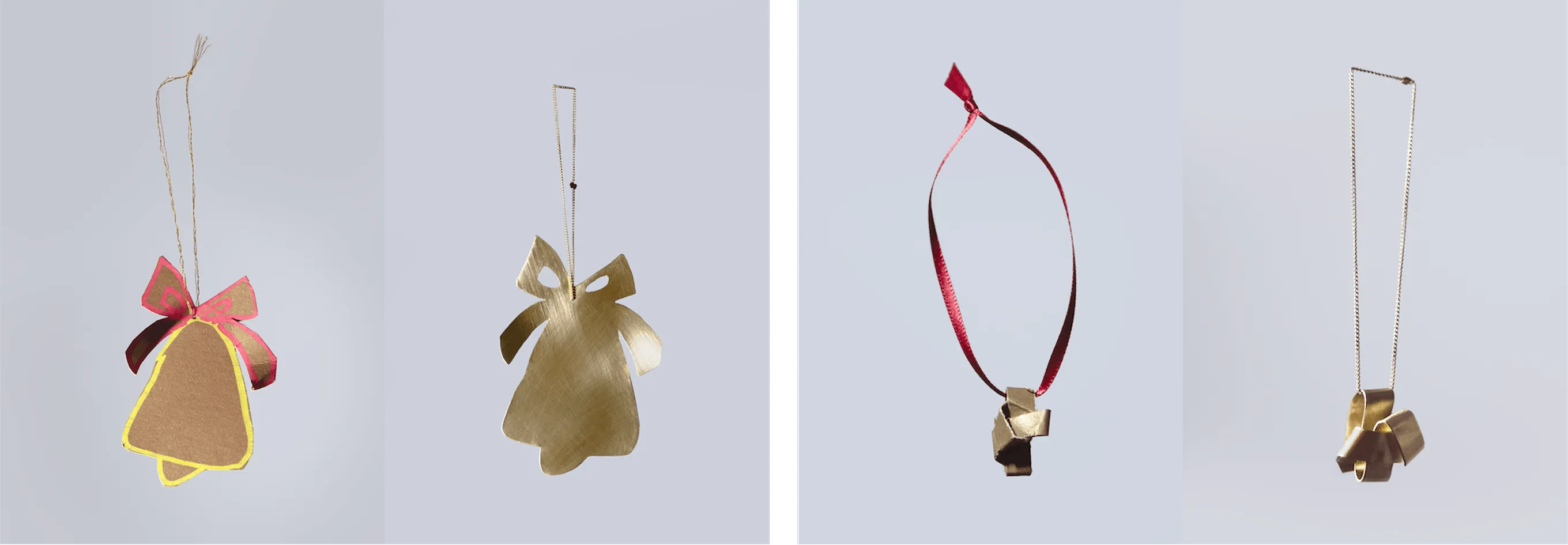
Ornament design workshop with children held at Pangraphics. Using Takeo's "Stardream" paper, which features a metallic texture, children freely created their own ornaments (left). Based on these designs, brass ornaments were later produced by SO/OBJECTS (right). The workshop welcomed children ranging in age from 1 to 12.
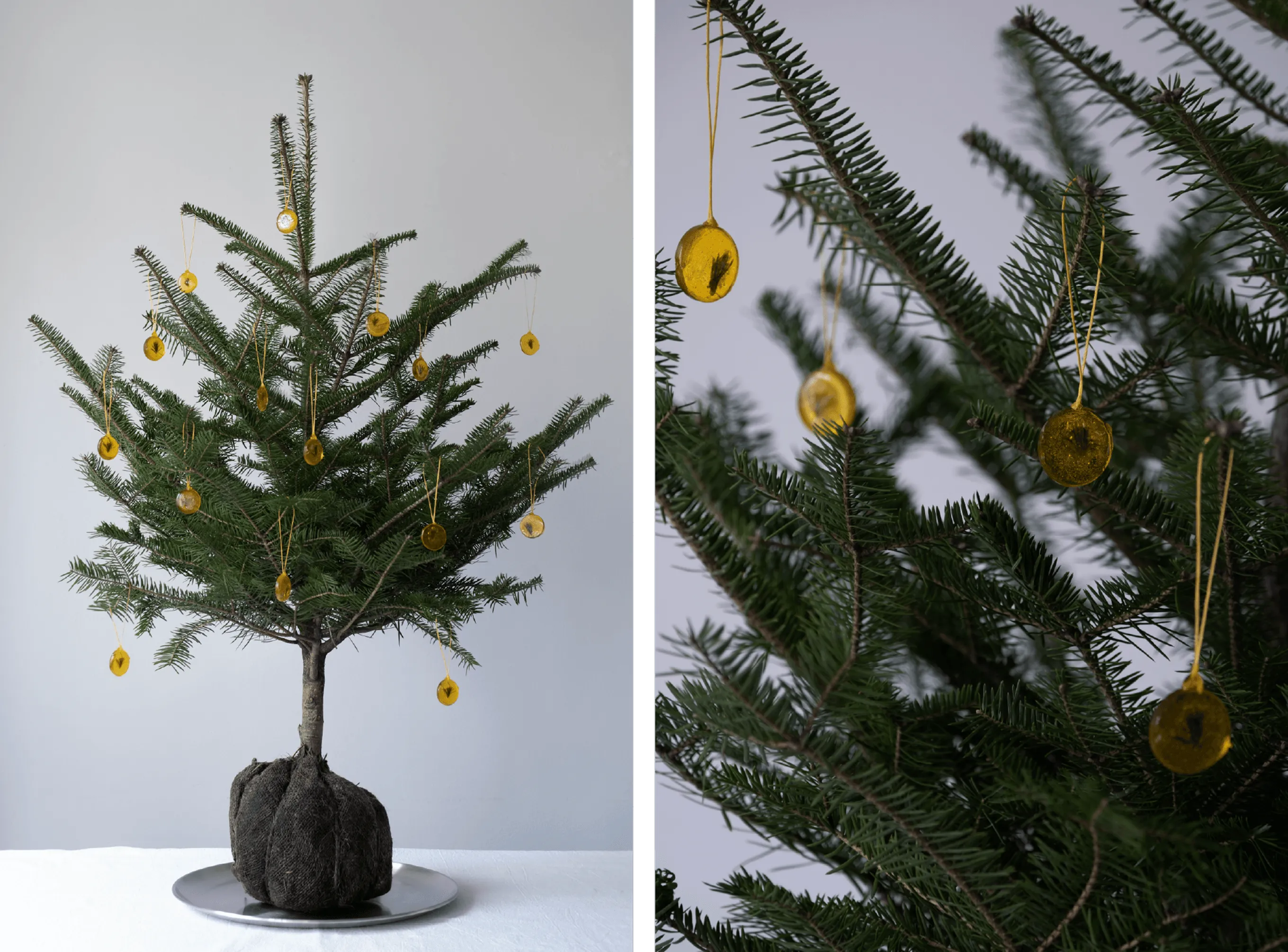
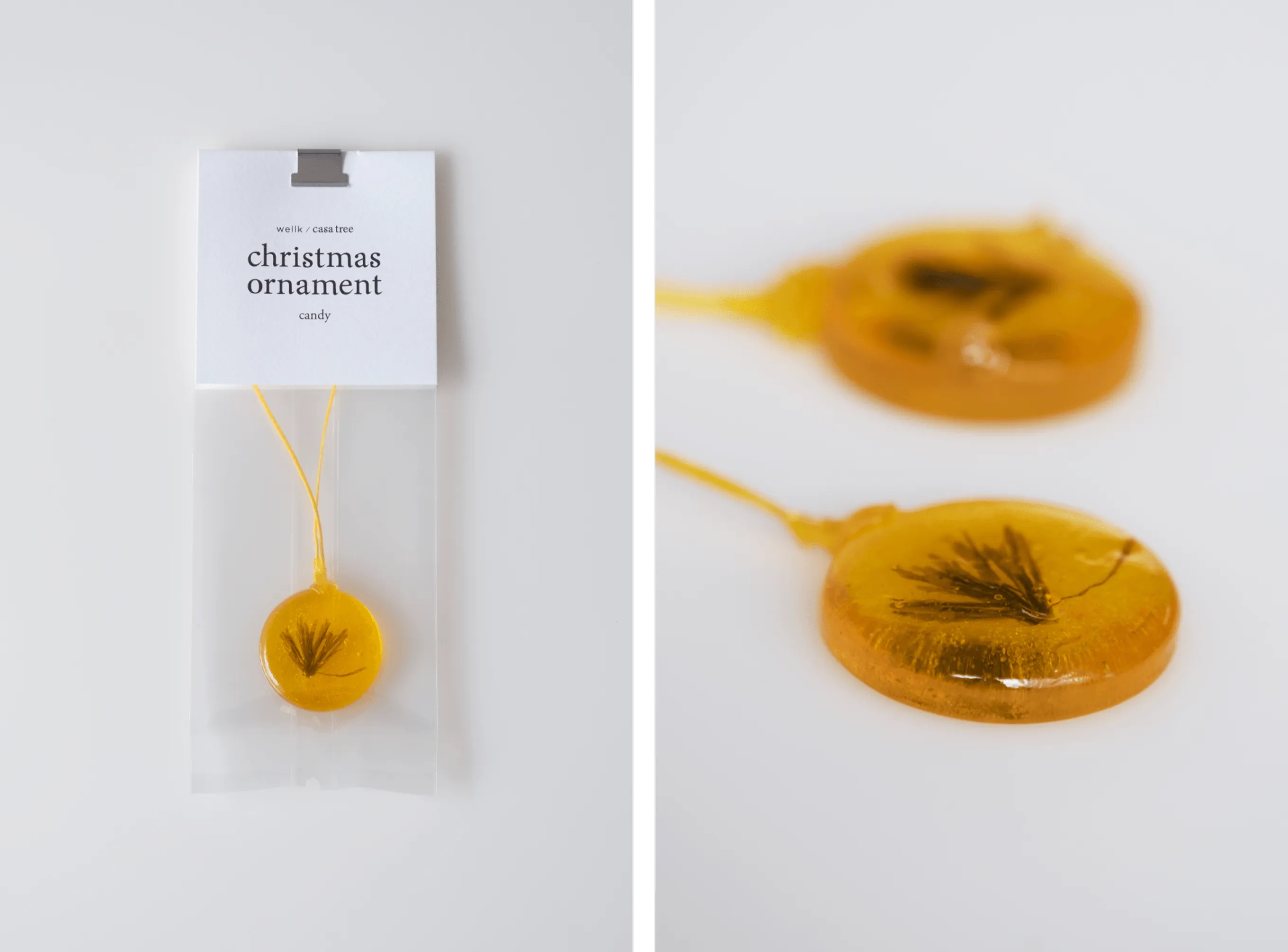
Edible Christmas ornament project. Developed in collaboration with casa tree, a brand specializing in live Christmas trees, and wellk, a café and restaurant in Meguro. Pangraphics created the concept for edible candy ornaments, with wellk developing the recipes. The ornaments were sold through casa tree's online store and at This___, a select shop located near Shoin Shrine. Workshops were also held as part of "Cake study," organized by Ishihara, where children created their own edible ornaments.