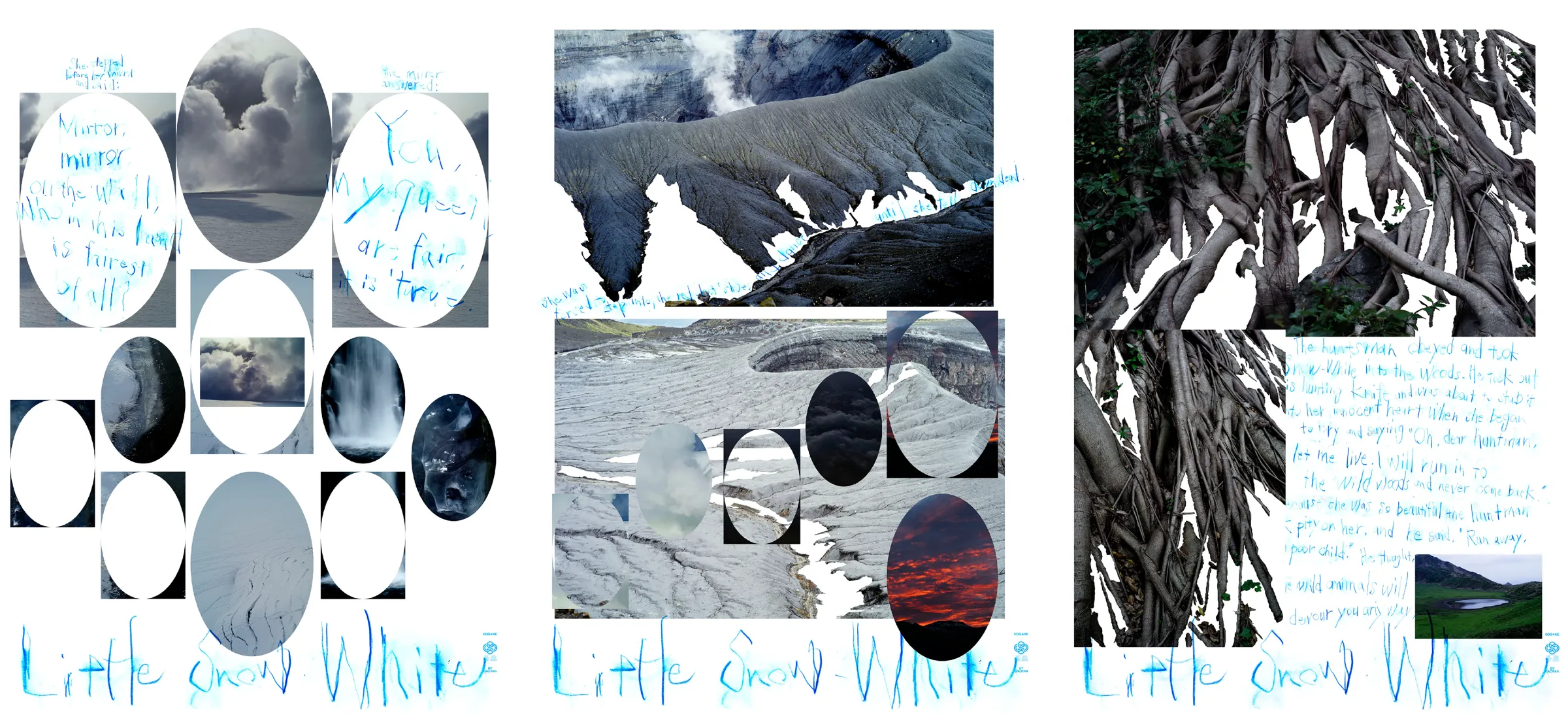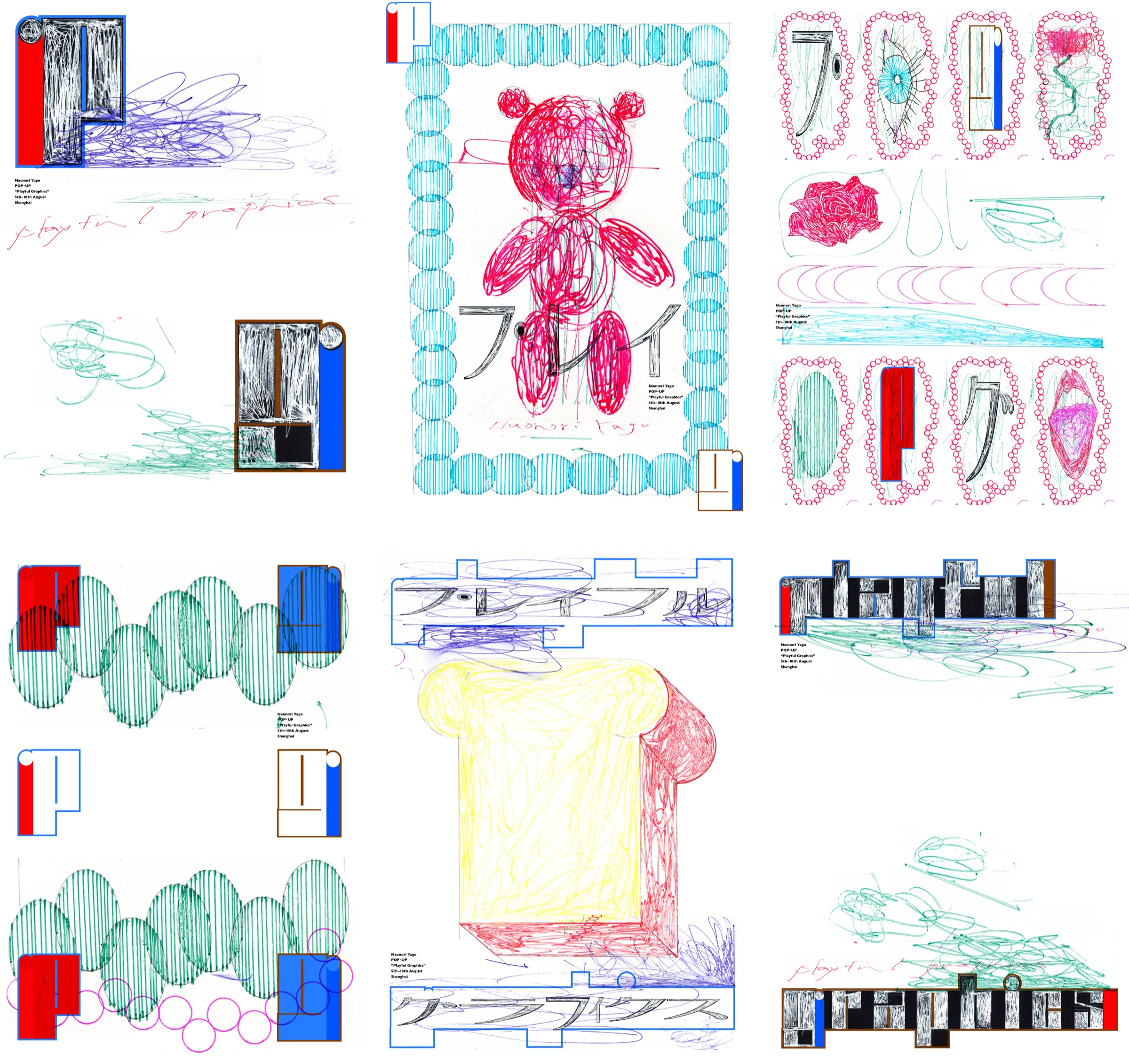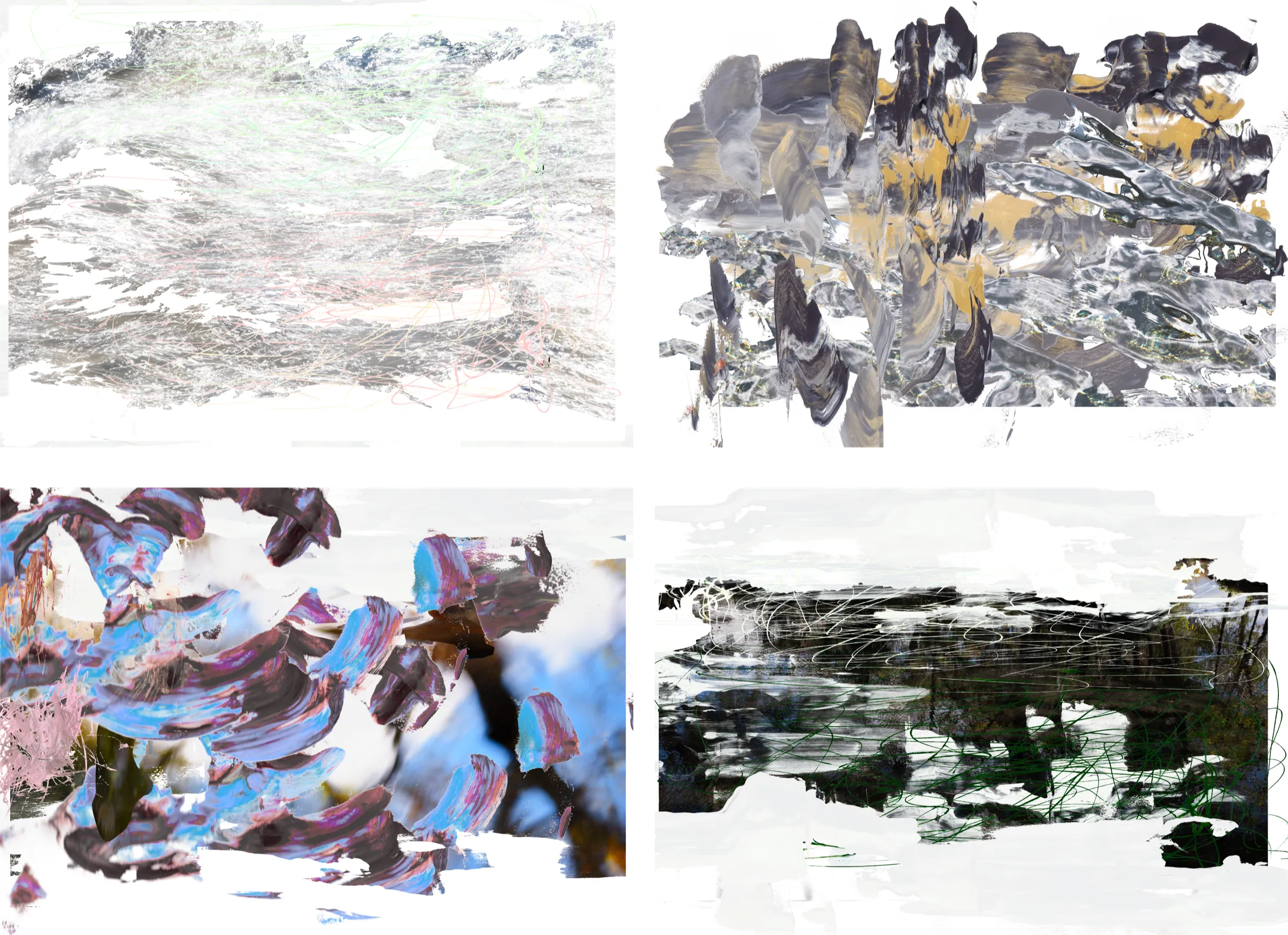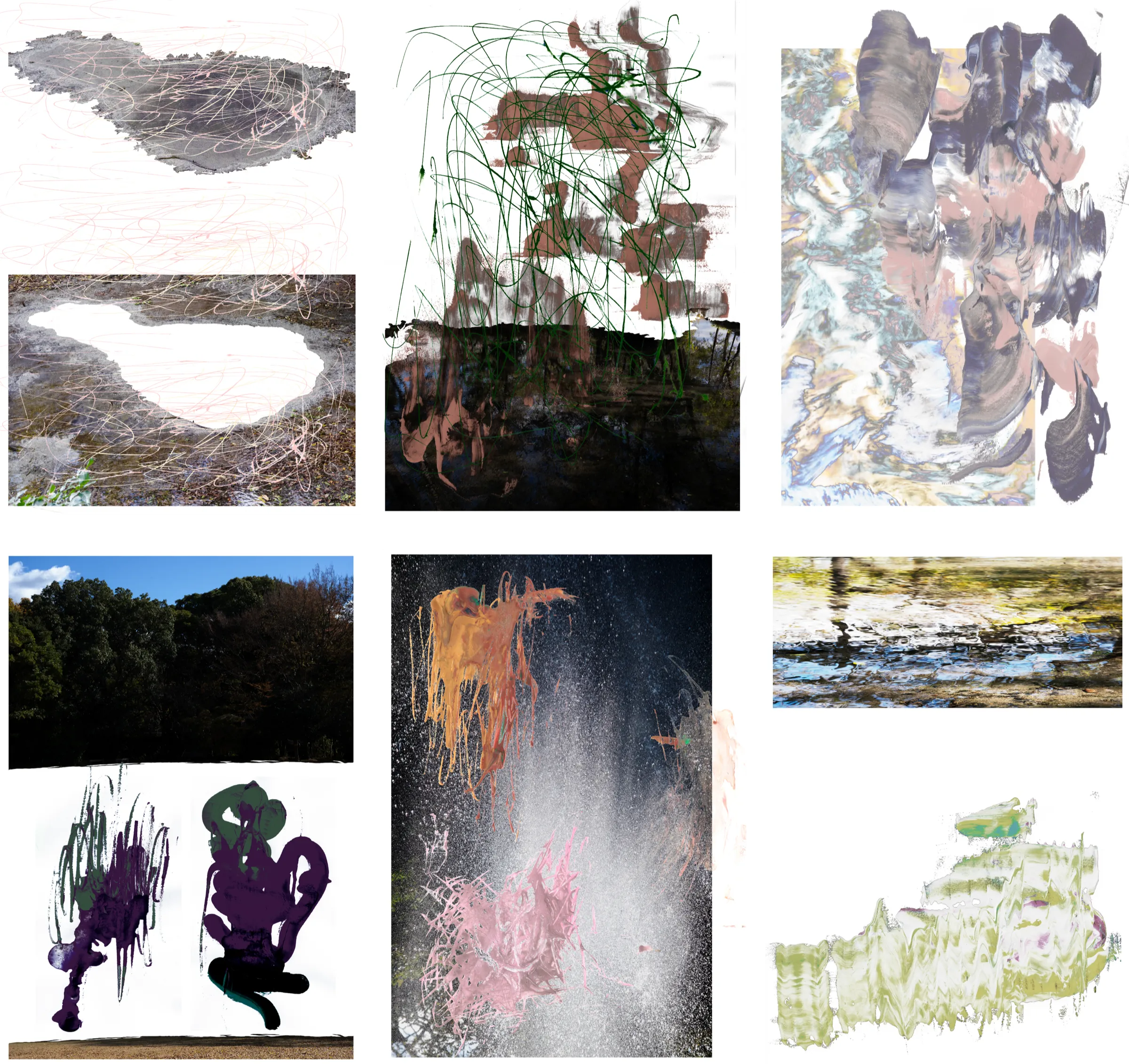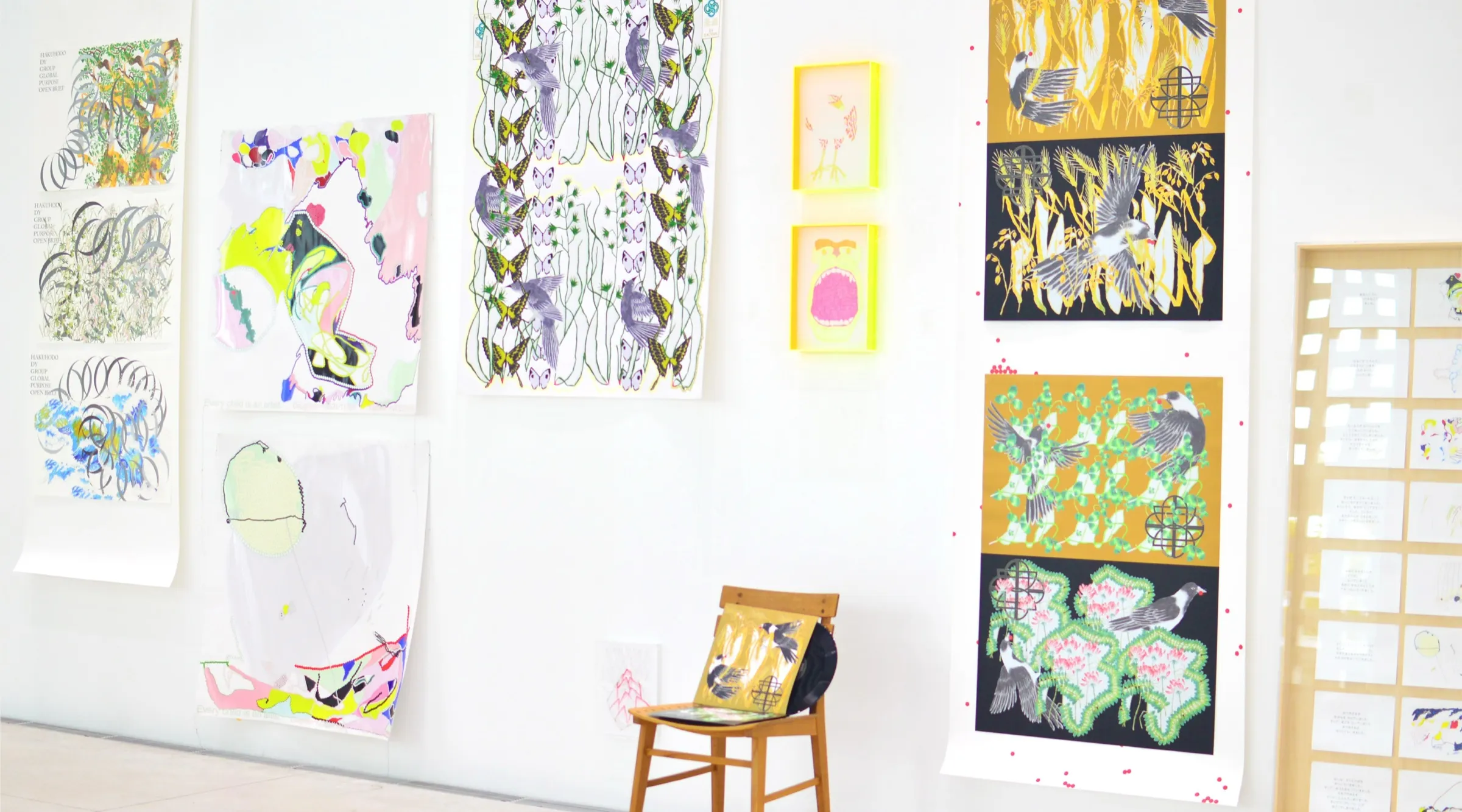
Hand-Drawn graphics
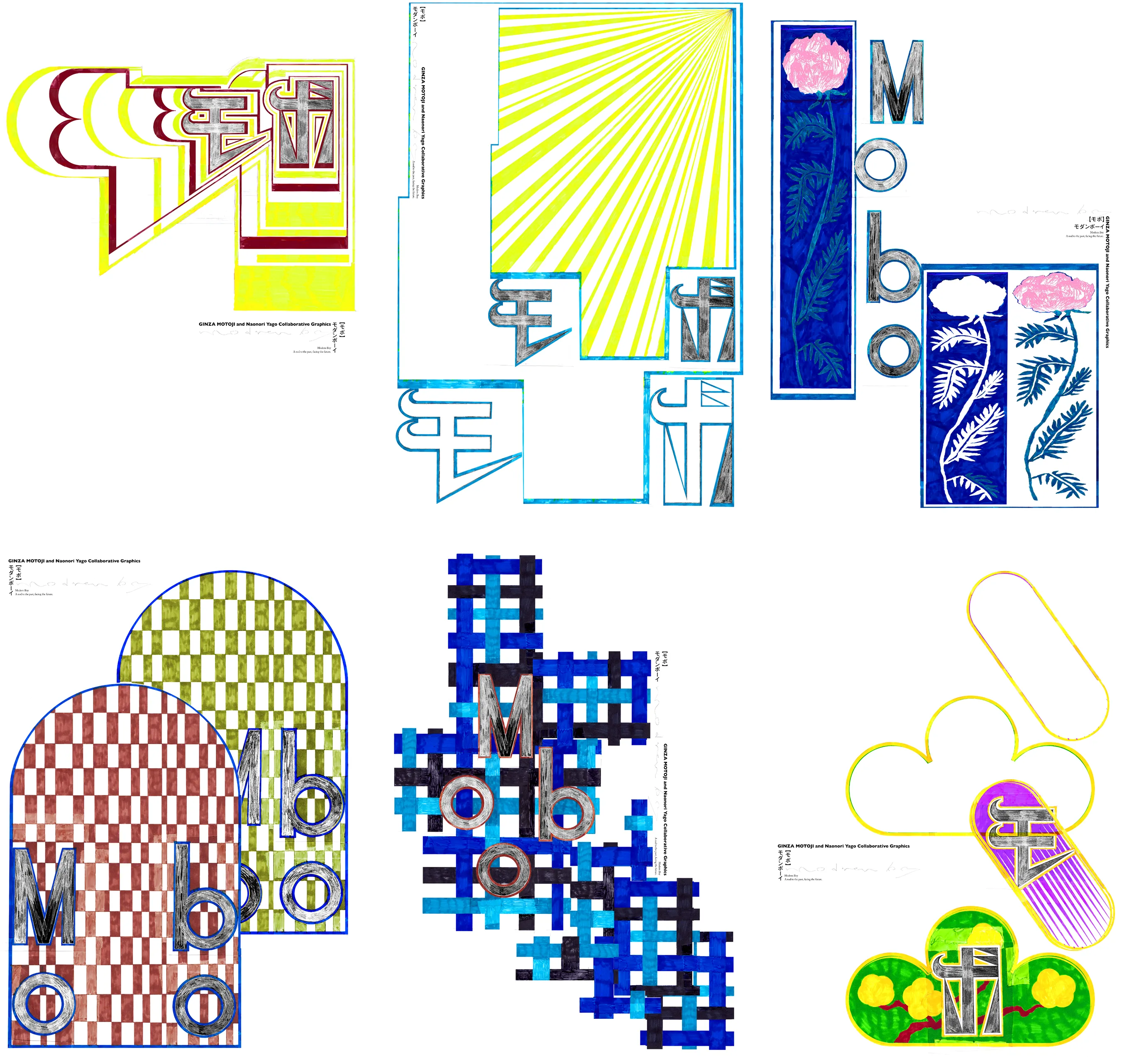
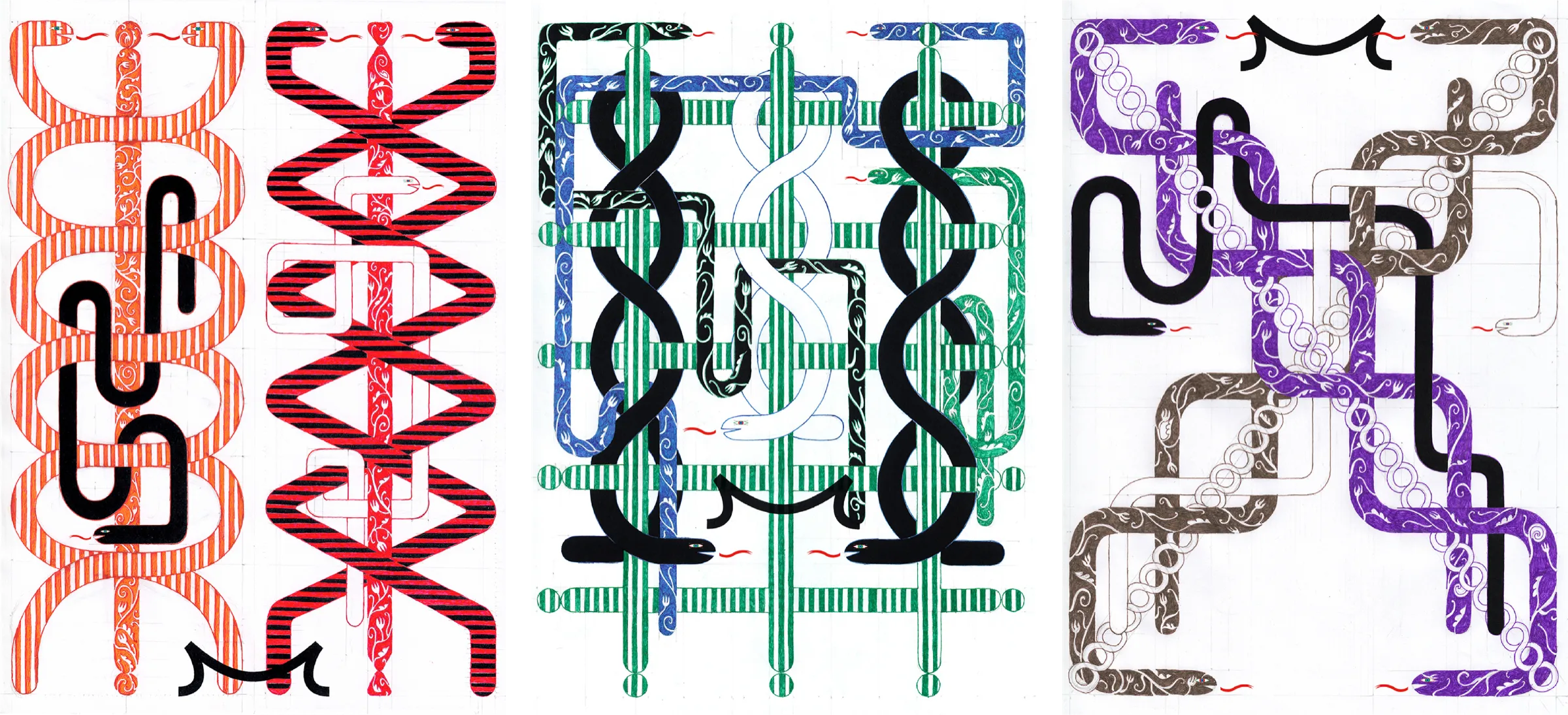
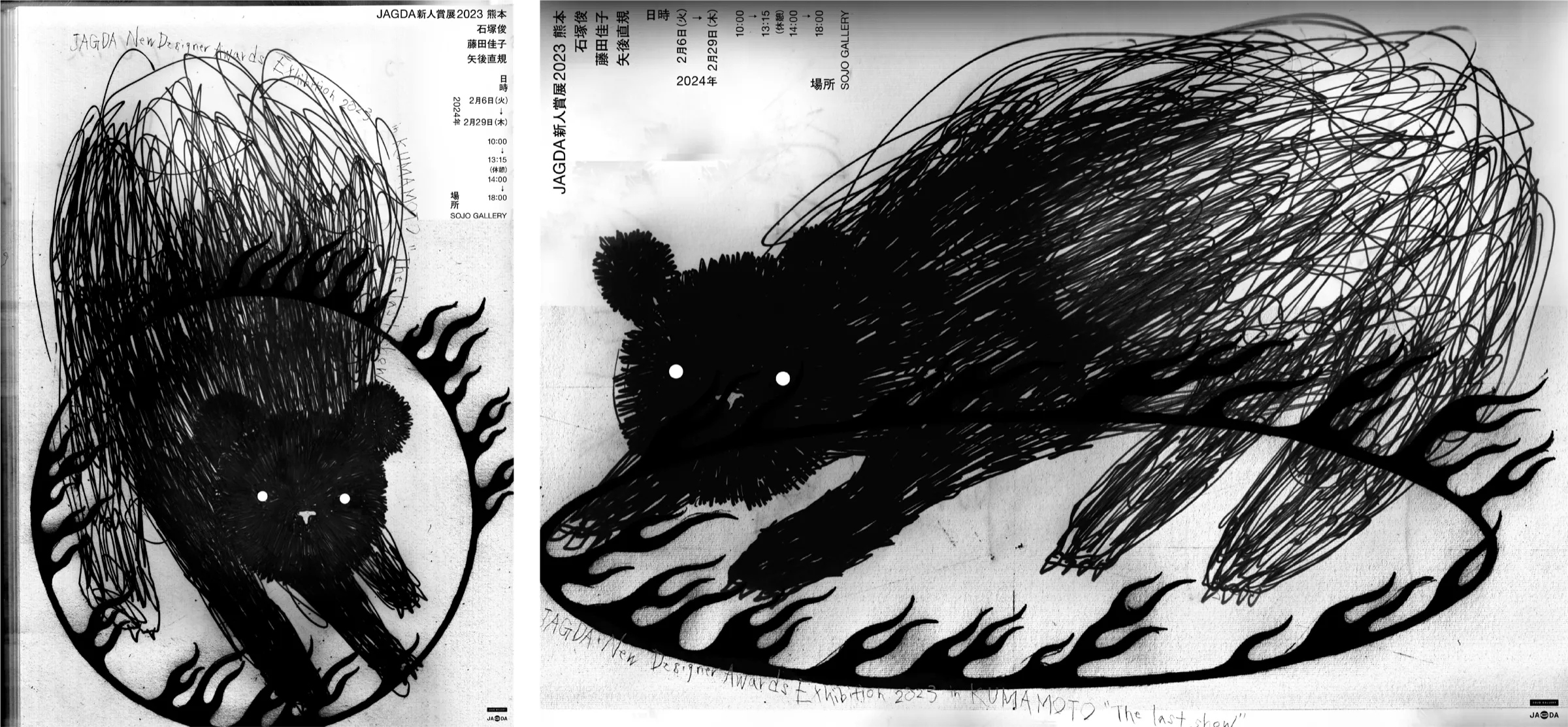
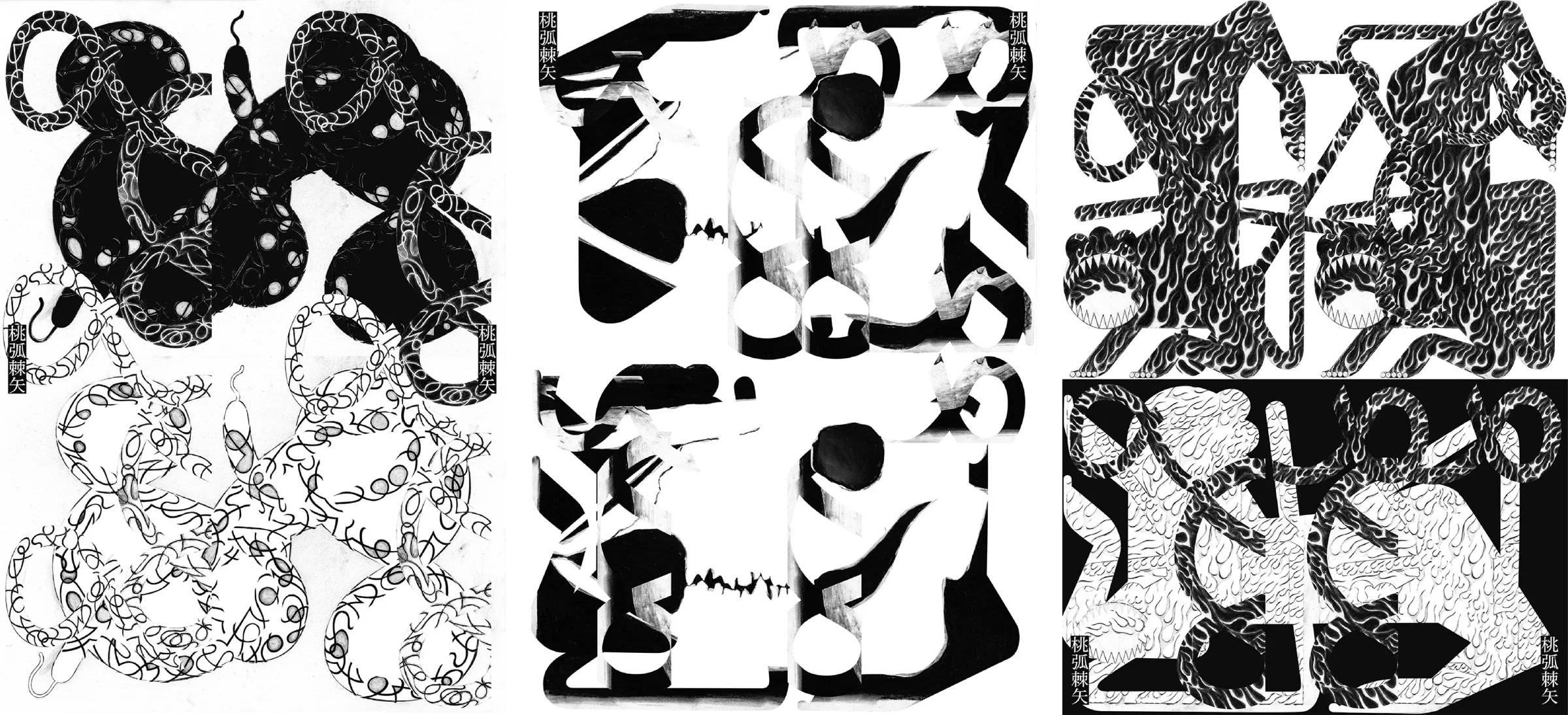
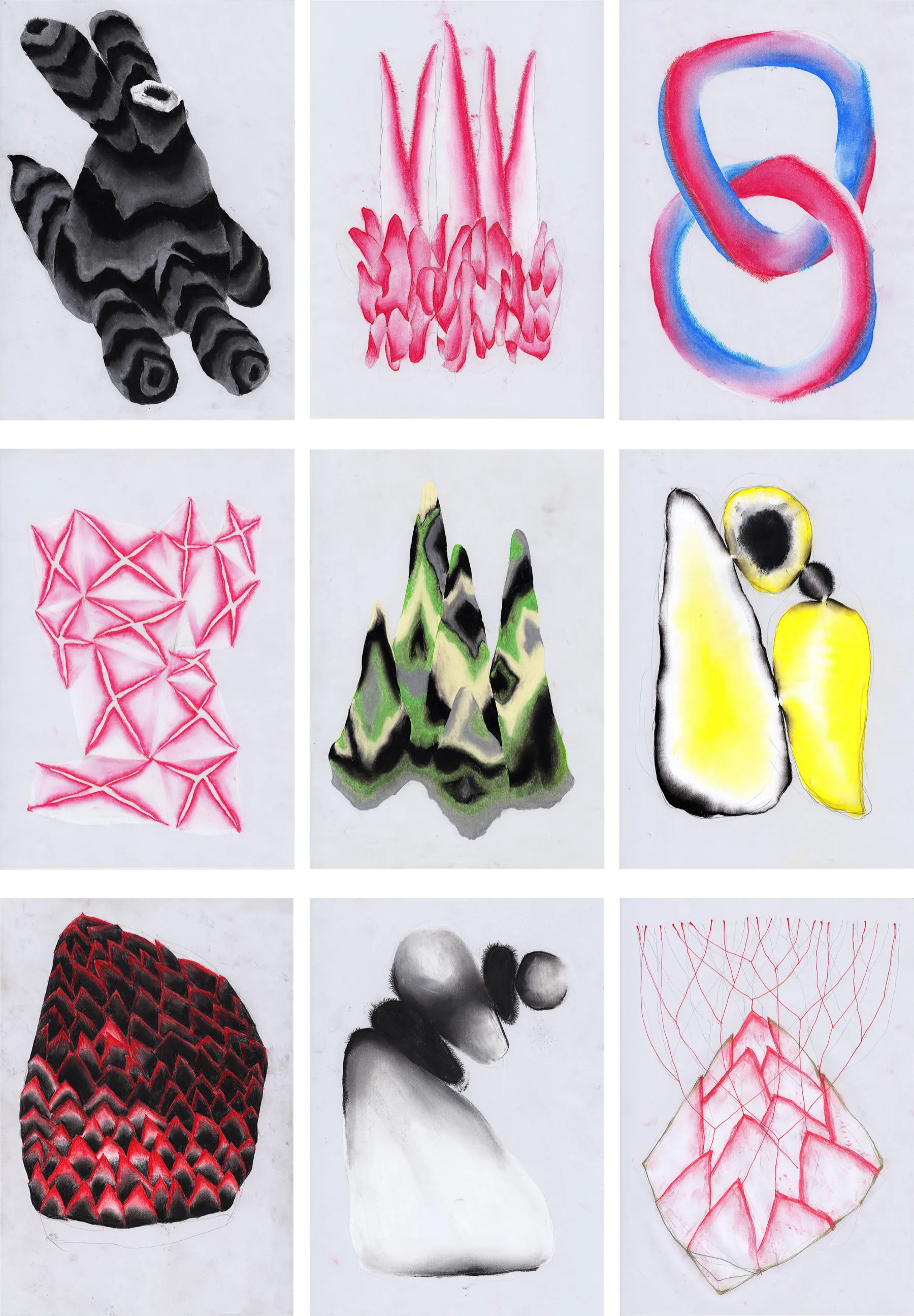
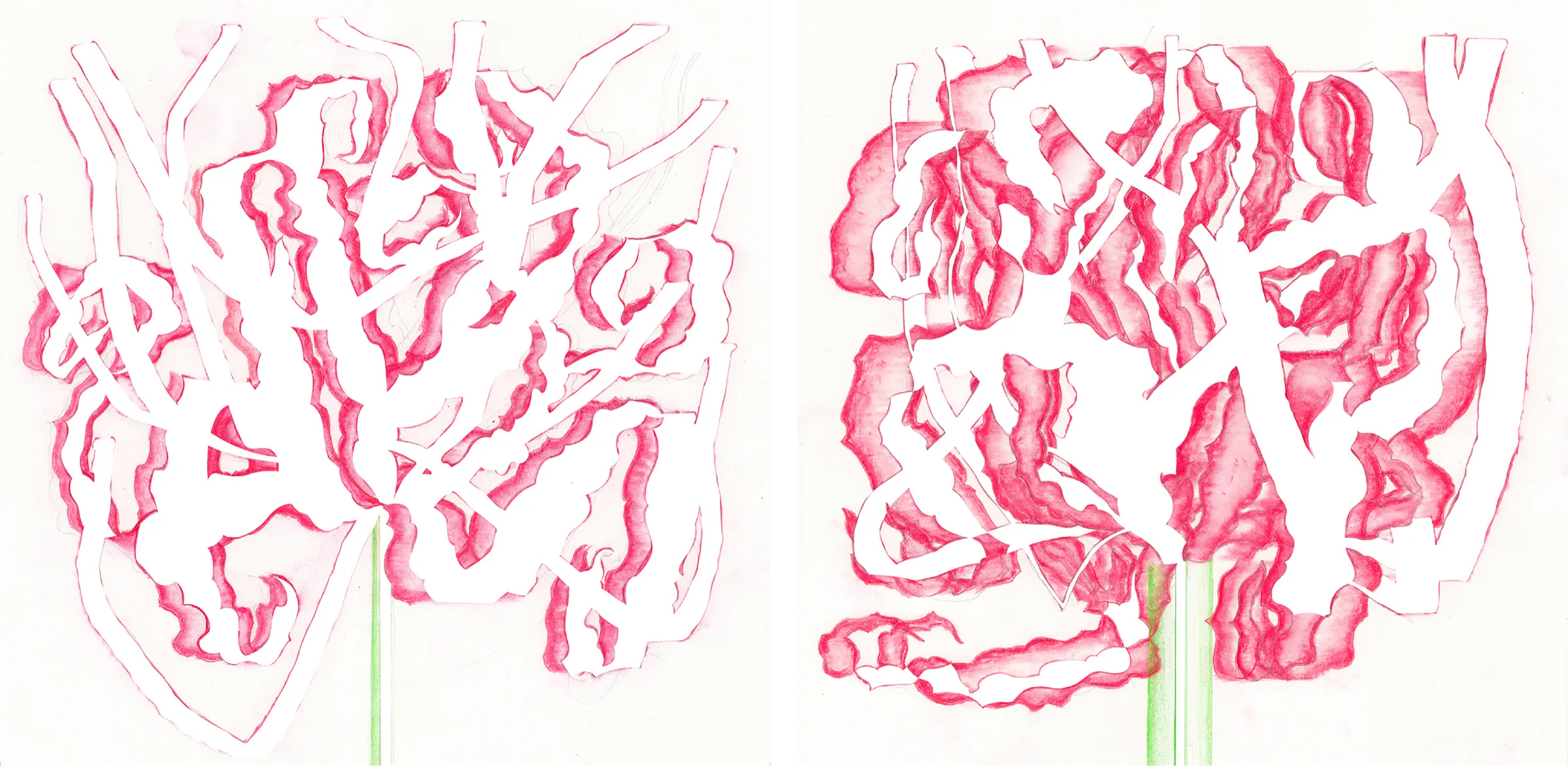
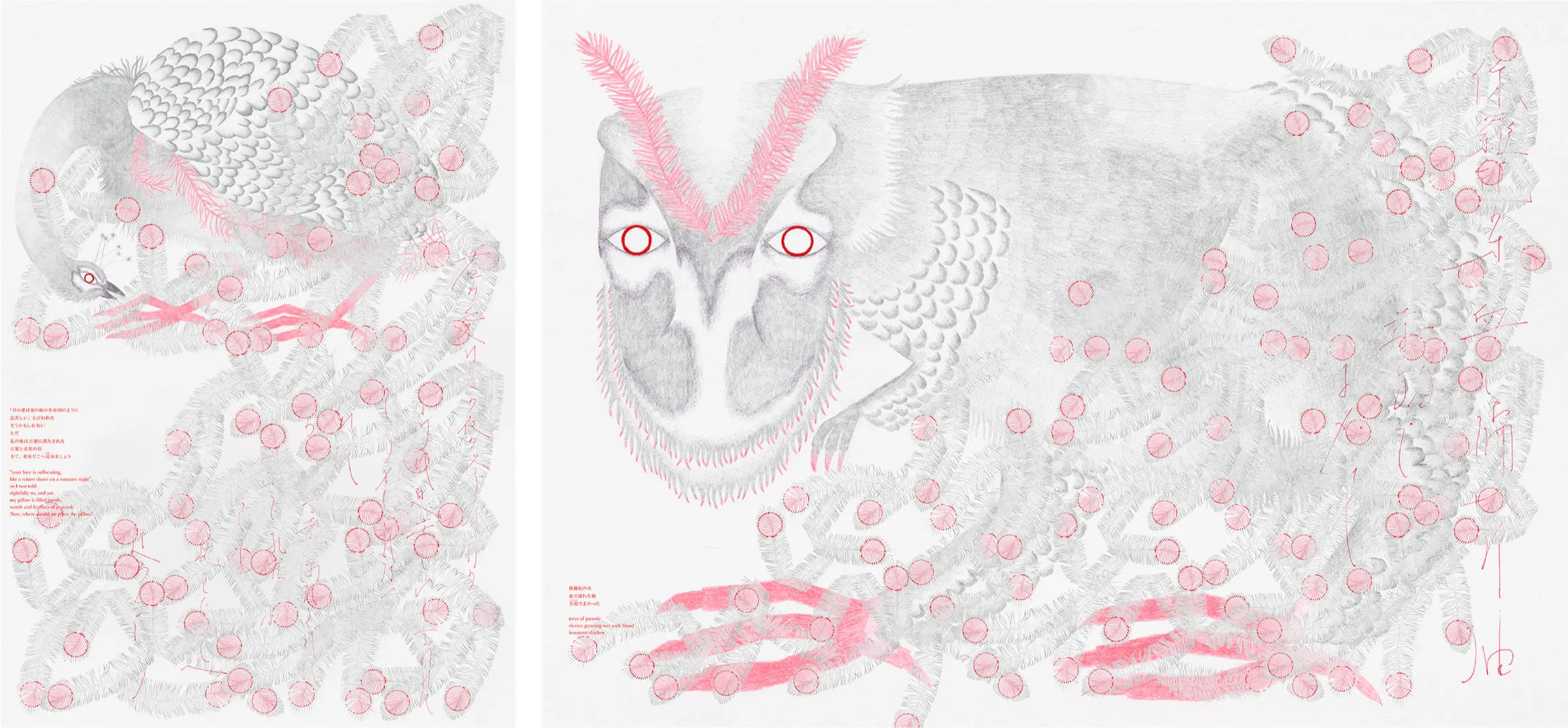
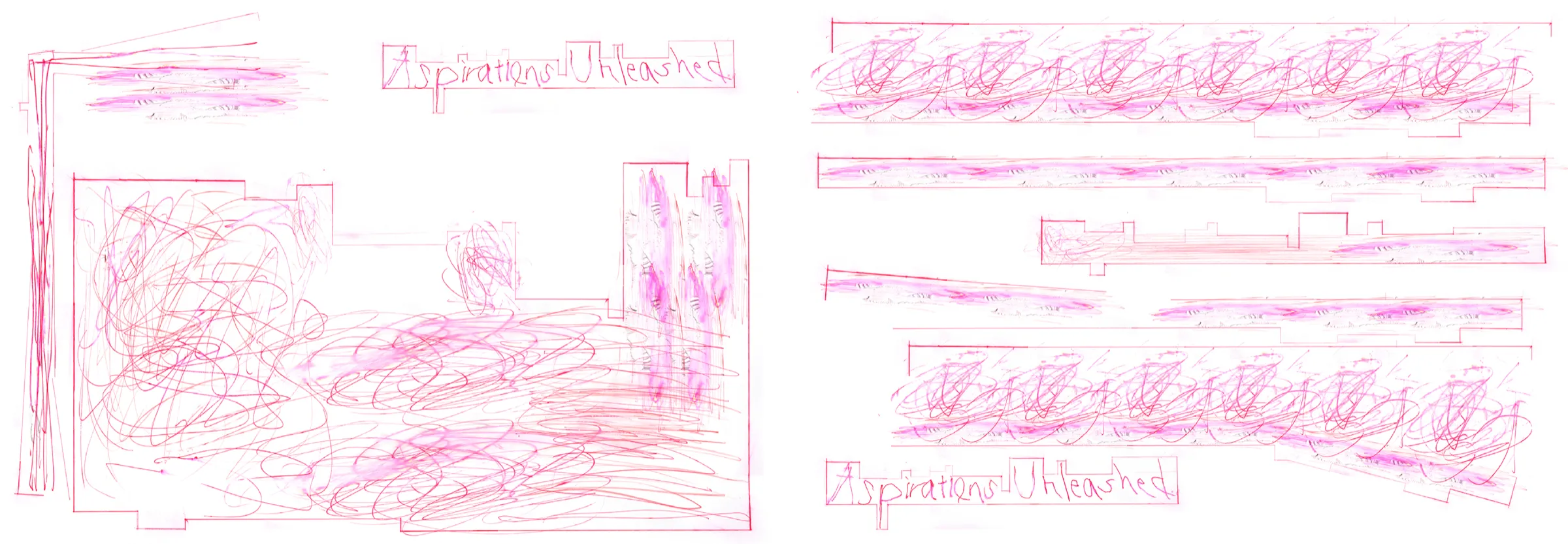
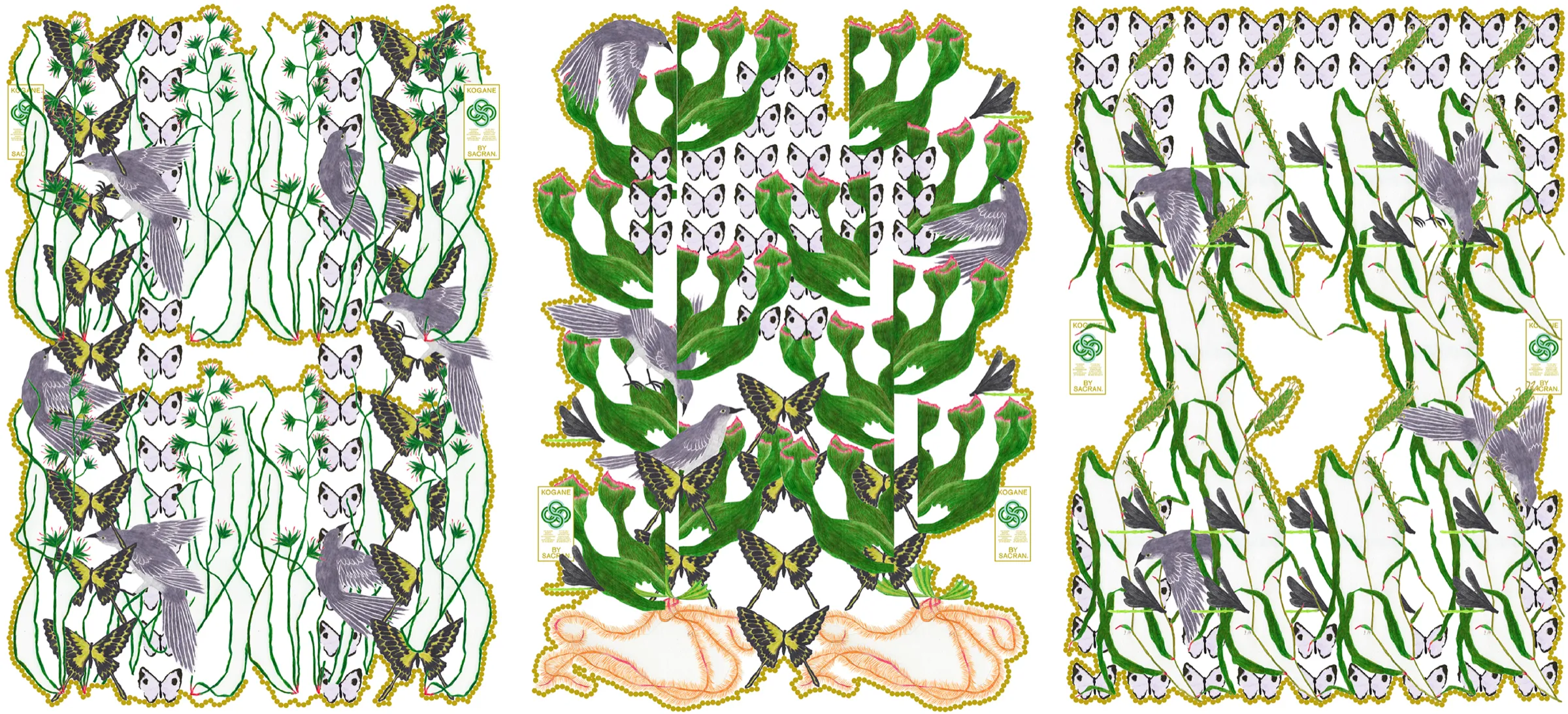
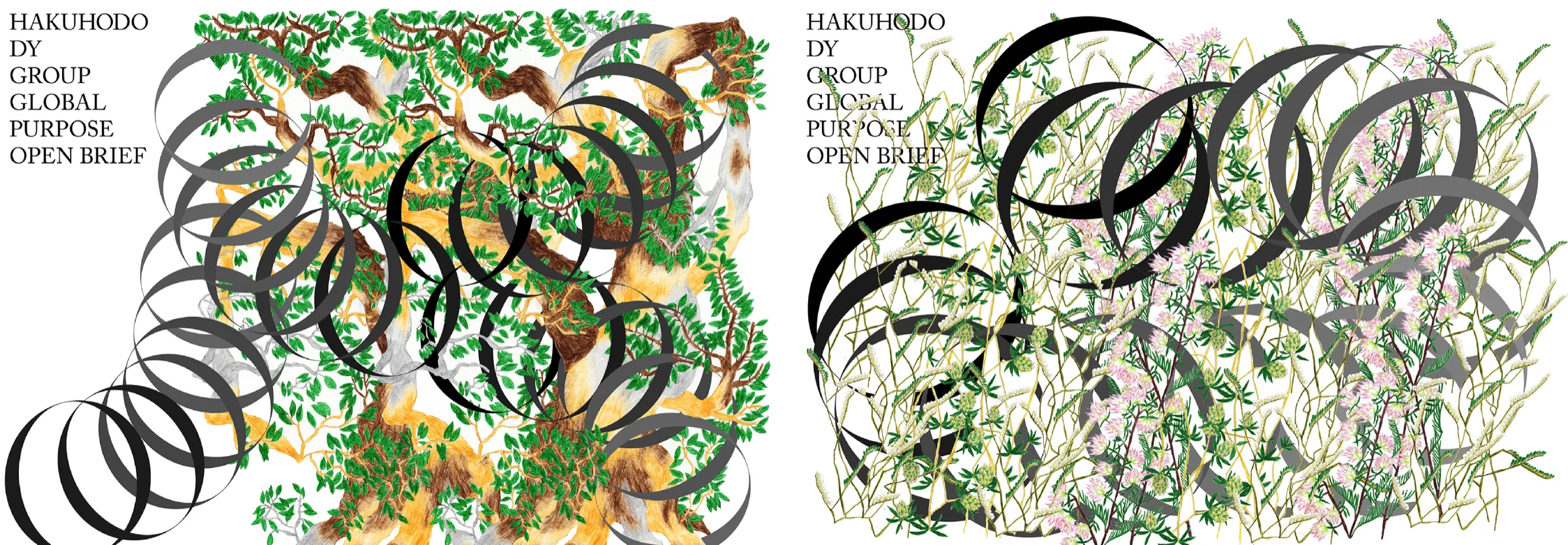
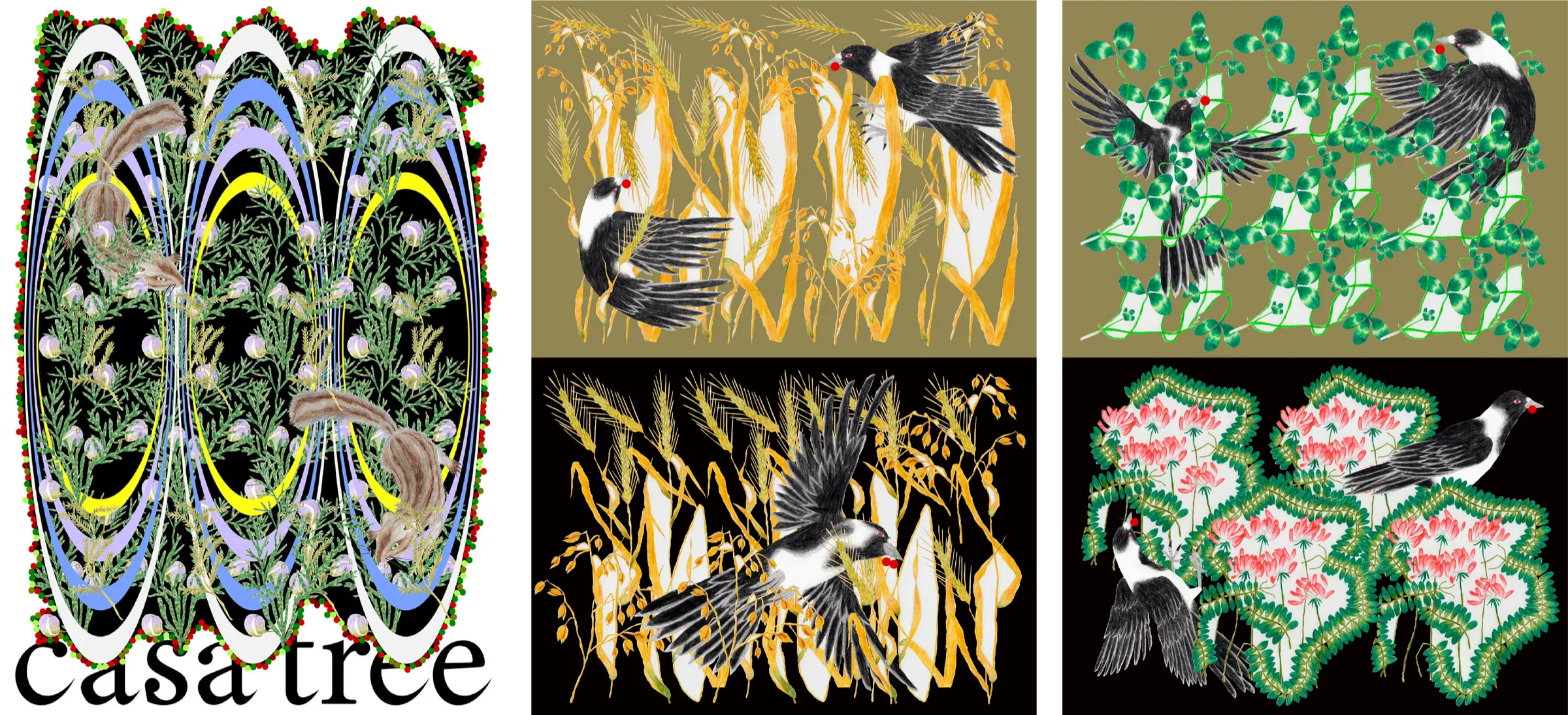
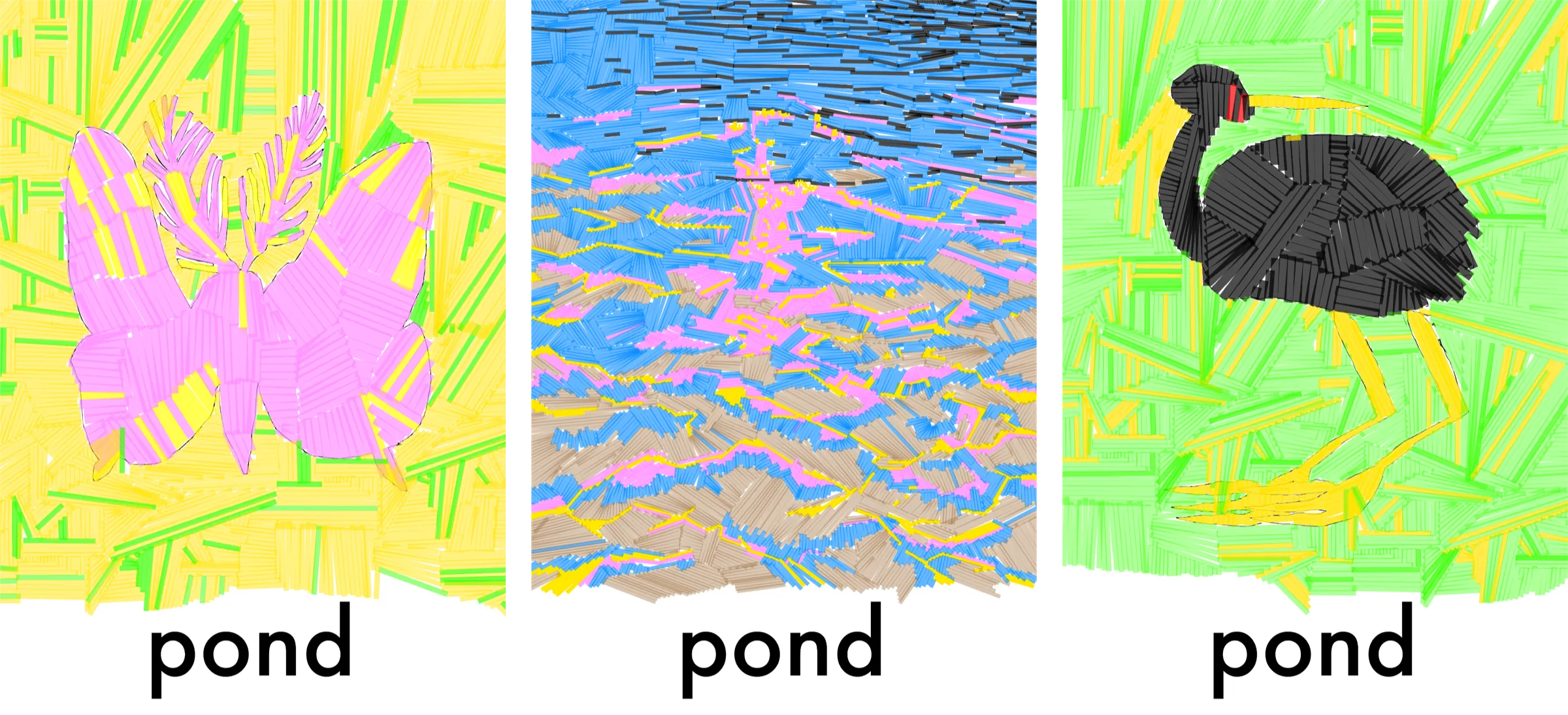
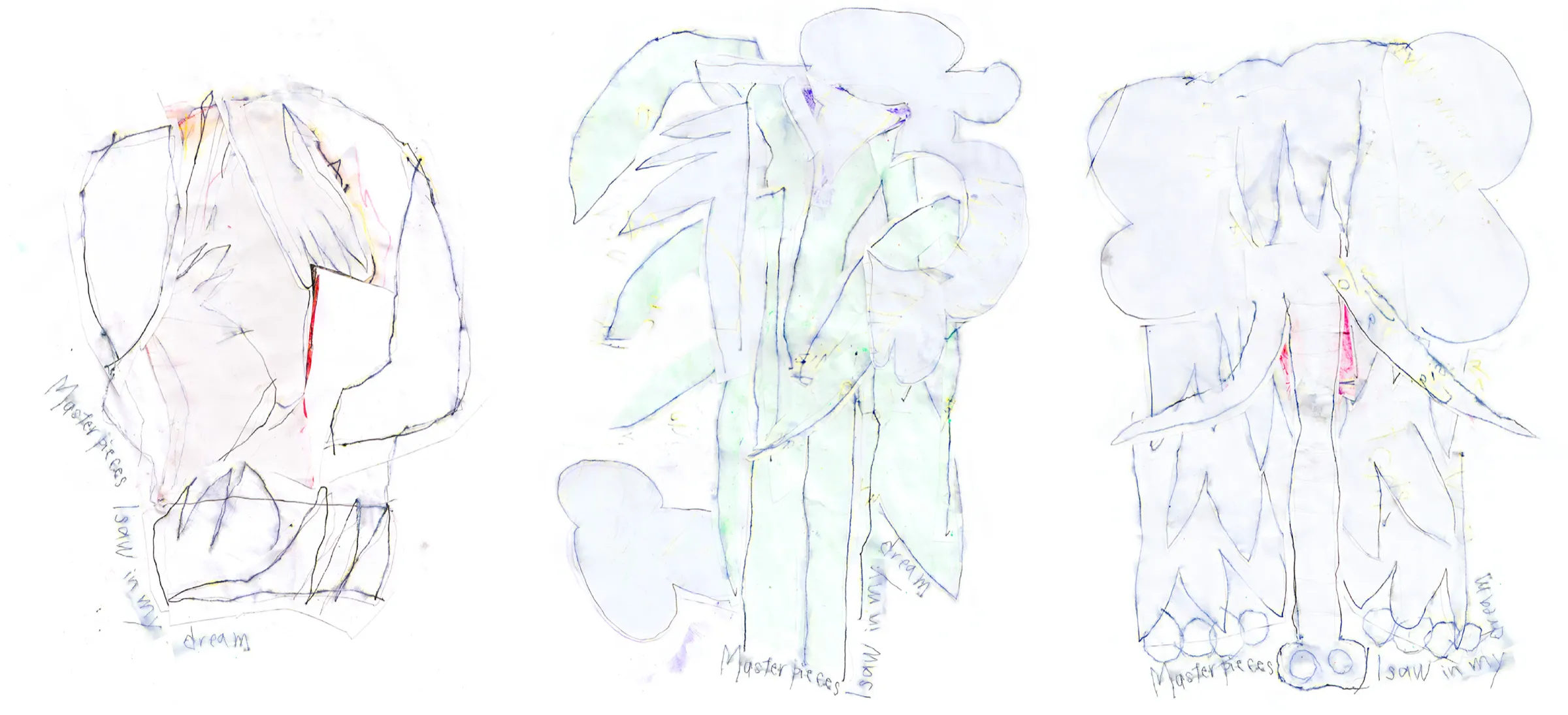
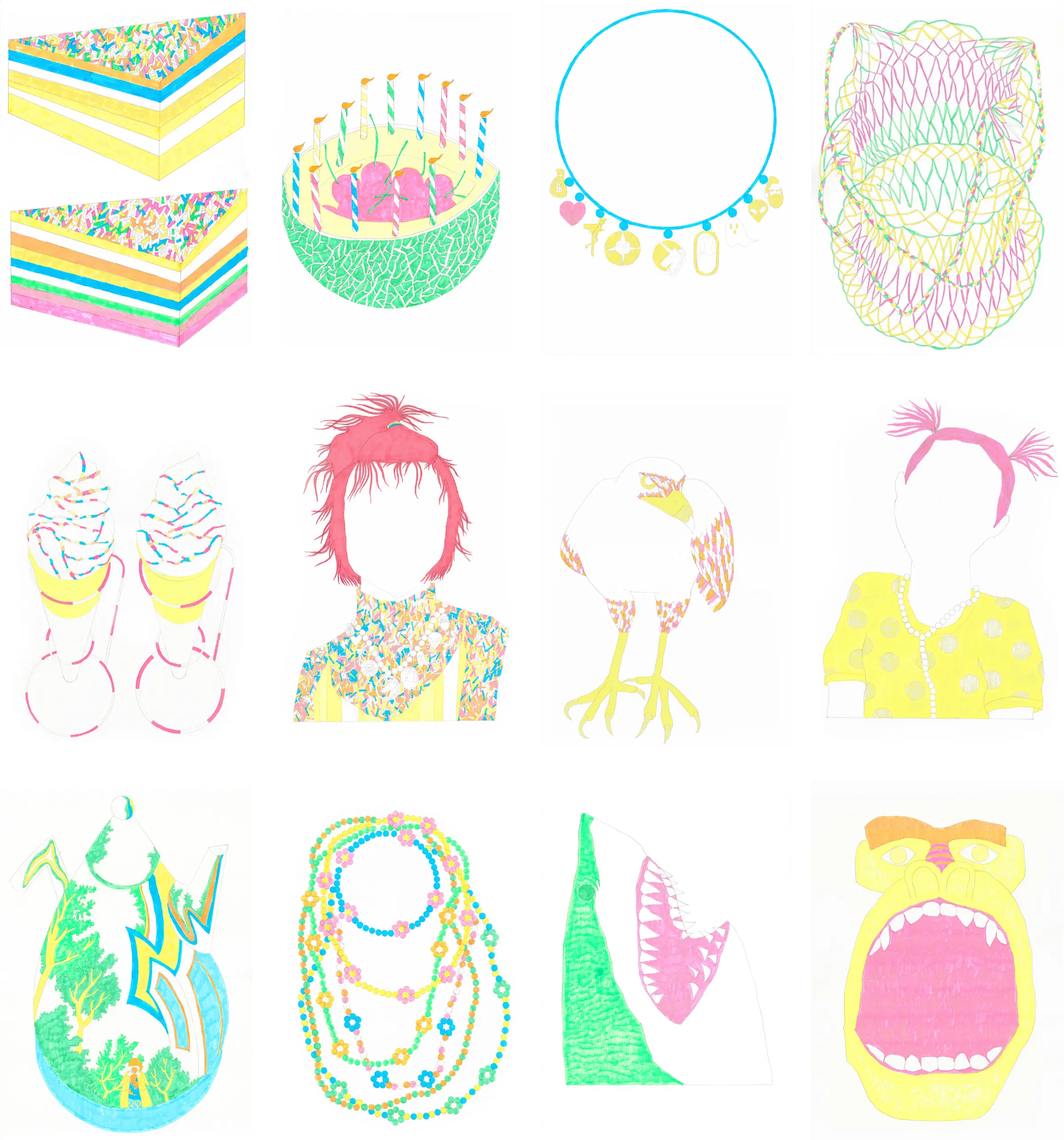
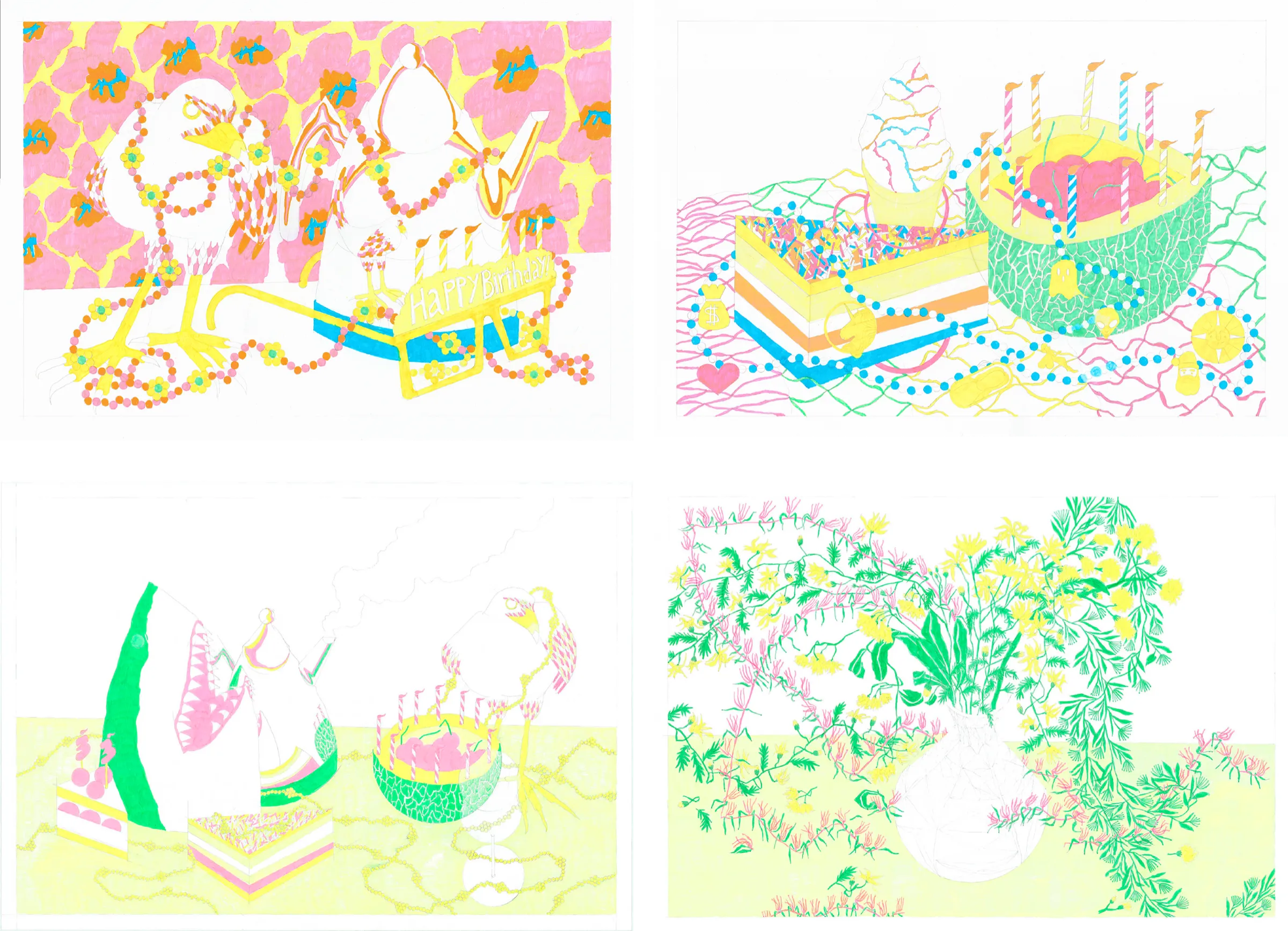
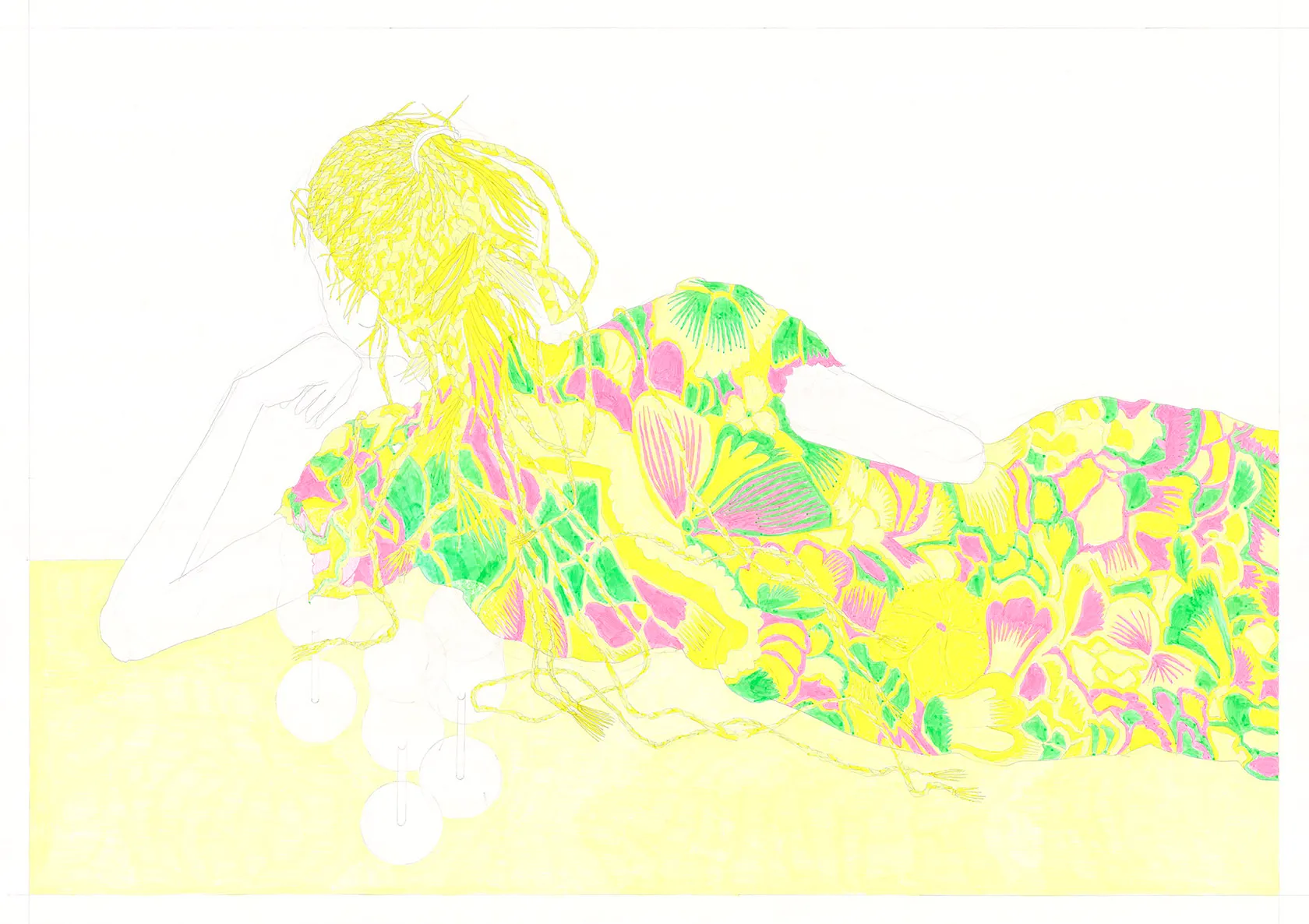
At Pangraphics, we develop graphic design rooted in Naonori Yago's hand-drawn practice—drawing, painting, and calligraphy. Based on his concept of "Humane Error," these works explore the expansion of graphic design into artwork. The following text is a re-edited compilation from Yago's past interviews.
What "Humane Error" Means
In my hand-drawn graphic work, I value the concept of "Humane Error." It is an approach that embraces human mistakes and imperfections as part of the design itself. Bleeds, smudges, and even construction lines—elements typically removed during the design process—are intentionally retained, allowing imperfection to become embedded within the work. Even when working digitally, I try to avoid using the "delete" function as much as possible. Rather than erasing what has already been created, I choose to move forward—repairing and transforming without returning to a previous state.
This way of thinking also informs my approach to photographic direction. Instead of over-controlling the outcome, I leave room for the ideas and proposals of stylists, hair and makeup artists, and prop artists. Within a structured process, I actively embrace improvisation and unexpected ideas as they emerge.
The same philosophy extends to brand design and advertising. In discussions with partners and clients, rather than insisting on the correctness of my own carefully crafted ideas, I try to welcome directions that arise spontaneously in the moment, and to enjoy the process of designing together. "Humane Error" is about recognizing that the future is not limited to Plan A— that it also exists in Plan B, Plan C, and beyond— and about embracing even the unexpected as something to be enjoyed.
I have long believed that design should be simple, strong, and correct— something rigorous, stripped down to the point where its essence becomes fully visible. But now, I feel there may be another side to design. What we need today may be something imperfect—something incomplete, and yet still loved.
There is a concept known as the butterfly effect: the idea that the flap of a butterfly's wings might, somewhere far away, trigger a tornado. To me, this stands in contrast to a world governed entirely by calculation, like a fully modeled 3D environment. It suggests a kind of romance—that even the smallest phenomenon might create a profound impact elsewhere.
From a macro perspective, individual voices or small actions may seem powerless. But I believe that even the smallest gesture or word can influence the world—can change everything. In that sense, it feels almost like a hymn to life.
In the field of graphic design, there is often a belief that the world can be fully expressed through concepts. Yet I believe that unresolved, unrefined individual thoughts are what truly have the power to change something.
Even the smallest presence can become like a keystone species within an ecosystem— a force that shapes the future in ways unseen. I believe design has the power to guide these small voices into becoming such a presence.